Descripción del Producto
|
Producto |
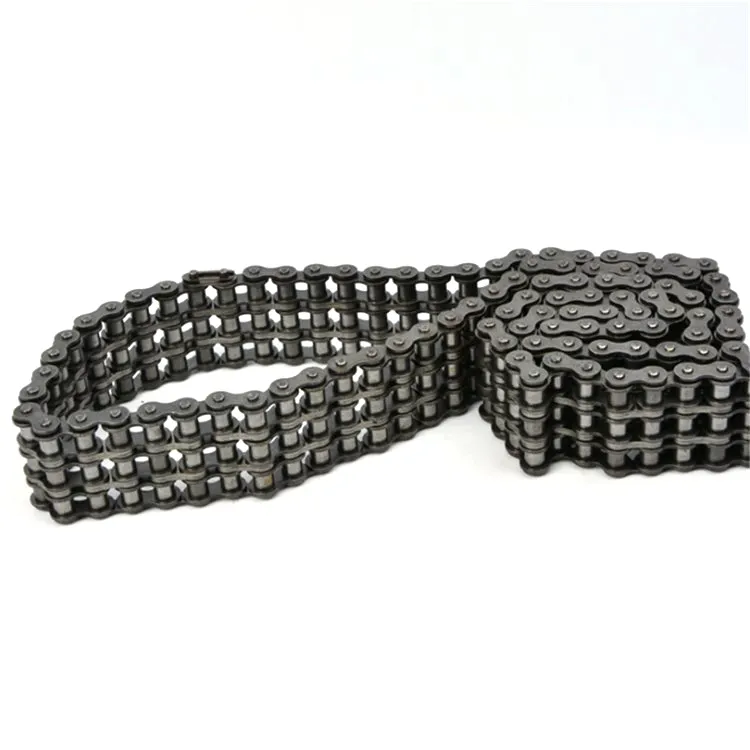
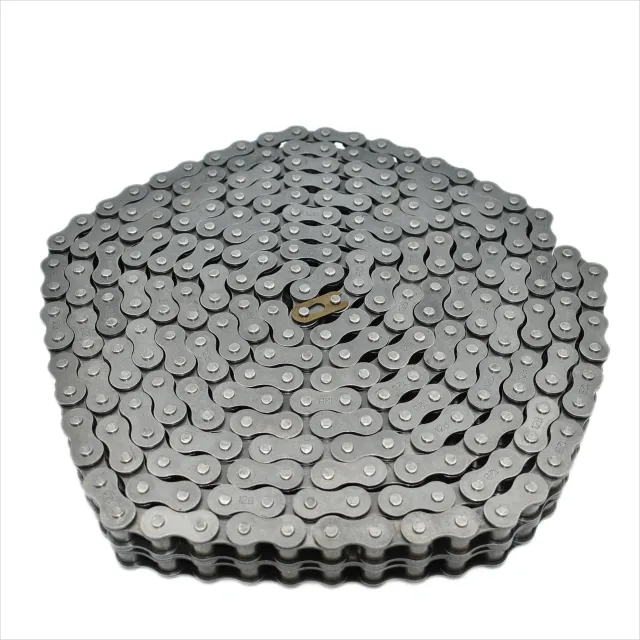
Cadena de rodillos de doble paso estándar |
||
|
Material |
Acero 40Mn, acero inoxidable 304, acero inoxidable 316 y acero inoxidable 201. |
||
|
Tipos |
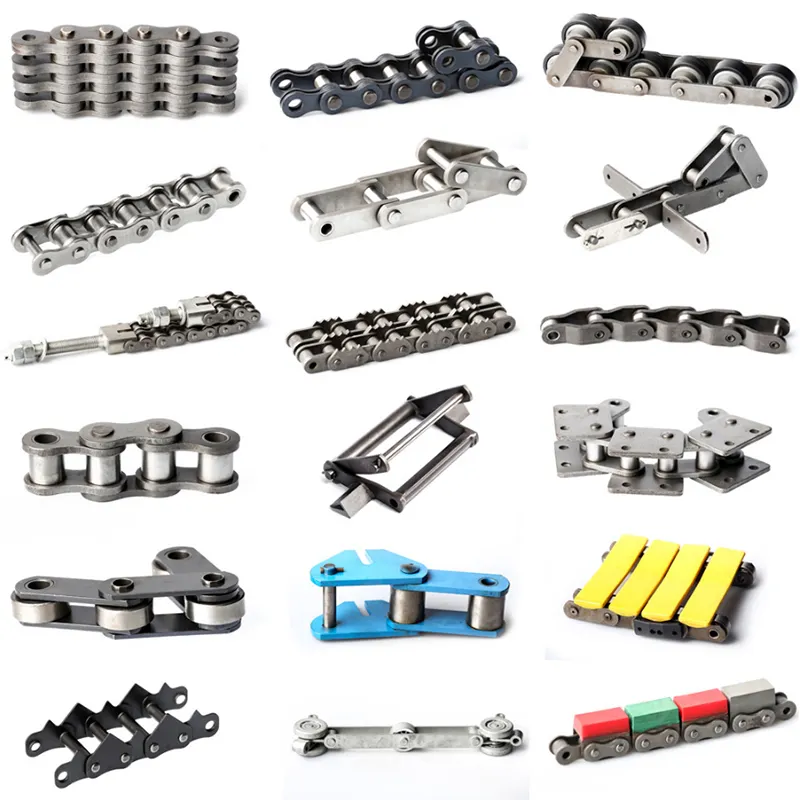
Cadenas estándar y cadenas especiales, como cadenas de las series A o B, cadenas de rodillos, cadenas motrices, cadenas transportadoras, cadenas de elevación, cadenas agrícolas, piñones, engranajes, ruedas, etc. |
||
|
Serie |
Serie A (pasos de 12,7 a 50,8 mm), serie B (pasos de 9,525 a 50,8 mm) y la serie pesada. |
||
|
Cadena de rodillos de precisión de paso corto |
Cadenas de rodillos Simplex y cadenas con bujes: 04C-1,06C-1,085-1,08A-1,10A-1,12A-1,16A-1,20A-1,24A-1,28A-1,32A-1,36A-1,40A-1,48A-1 04C-2,06C-2,085-2,08A-2,10A-2,12A-2,16A-2,20A-2,24A-2,28A-2,32A-2,36A-2,40A-2,48A-2 04C-3,06C-2,085-3,08A-3,10A-3,12A-3,16A-3,20A-3,24A-3,28A-3,32A-3,36A-3,40A-3,48A-3 |
||
|
Tipo de eslabones de cadena |
Enlaces estándar (sin archivo adjunto) y enlaces no estándar (con archivo adjunto).
A1: Accesorios acodados de un lado y un orificio. |
||
|
La ventaja de nuestros productos |
1. Cada paso, desde la orden de producción hasta el proceso de empaquetado, está sujeto a una estricta inspección de calidad. |
||
1. Entrega rápida: Los productos estándar se pueden entregar en tan solo 20 días.
2. Buen servicio: respuesta oportuna, cotización rápida, responsabilidad por el producto.
3. Excelente relación costo-beneficio: puede mantener la estabilidad de precios durante un período determinado, lo que genera mayores ganancias para los clientes.
4. Buena calidad: la producción y las pruebas cuentan con la supervisión correspondiente para garantizar la calidad del producto y obtener grandes elogios de los clientes.
5. Servicio OEM: los productos se pueden personalizar según los planos y requisitos.
Nos responsabilizamos de los productos solicitados. Confiamos plenamente en la calidad de nuestros productos. Si tiene algún problema tras recibir la mercancía, puede contactarnos directamente. Le atenderemos con prontitud y buscaremos una solución.
/* 22 de enero de 2571 19:08:37 */!function(){function s(e,r){var a,o={};try{e&&e.split(“”,).forEach(function(e,t){e&&(a=e.match(/(.*?):(.*)$/))&&1
| Material: | Aleación |
|---|---|
| Estructura: | Cadena de rodillos |
| Tratamiento de superficie: | Pulido |
| Muestras: |
US$ 35/kg
1 kg (Pedido mínimo) | Solicitar muestra |
|---|
| Personalización: |
Disponible
| Solicitud personalizada |
|---|
.shipping-cost-tm .tm-status-off{background: none;padding:0;color: #1470cc}
| Costo de envío:
Coste estimado por unidad. |
sobre el costo de envío y el tiempo estimado de entrega. |
|---|
| Método de pago: |
|
|---|---|
|
Pago inicial Pago completo |
| Divisa: | US$ |
|---|
| Devoluciones y reembolsos: | Puedes solicitar un reembolso hasta 30 días después de recibir los productos. |
|---|
¿Cómo influye la longitud de una cadena de transmisión en su rendimiento?
La longitud de una cadena de transmisión juega un papel importante en su rendimiento y funcionalidad generales. Aquí tienes una explicación detallada:
1. Ajuste y funcionamiento adecuados: La longitud de la cadena de transmisión debe seleccionarse cuidadosamente para asegurar que se ajuste y funcione correctamente dentro del sistema designado. Si la cadena es demasiado corta, es posible que no alcance adecuadamente las ruedas dentadas o poleas, lo que provocará una transmisión de potencia ineficaz y un posible deslizamiento de la cadena. Por otro lado, si la cadena es demasiado larga, puede combarse, generar una tensión excesiva o interferir con otros componentes, lo que resultará en un funcionamiento ineficiente o un desgaste prematuro.
2. Control de tensión y holgura: La longitud de la cadena de transmisión afecta al control de tensión y holgura del sistema. Una cadena con la tensión adecuada garantiza una transmisión de potencia óptima, reduce el juego y minimiza el riesgo de descarrilamiento. La longitud de la cadena debe ajustarse para mantener la tensión apropiada durante todo el ciclo de funcionamiento, teniendo en cuenta factores como las variaciones de carga, los cambios de temperatura y la dinámica del sistema.
3. Flexibilidad y requisitos de flexión: La longitud de una cadena de transmisión influye en su flexibilidad y capacidad de flexión. Las cadenas más largas pueden tener mayor flexibilidad, lo que les permite recorrer trayectorias complejas o adaptarse a mayores distancias entre piñones o poleas. Sin embargo, una longitud excesiva de la cadena puede provocar una flexión excesiva, lo que resulta en mayor fricción, desgaste y posibles fallas prematuras.
4. Interacción con las ruedas dentadas: La longitud de la cadena de transmisión afecta su interacción con las ruedas dentadas o poleas. El número de eslabones determina el acoplamiento entre la cadena y los dientes de las ruedas dentadas. Una longitud adecuada garantiza un acoplamiento suave, un desgaste mínimo de los dientes y una transferencia de potencia eficiente. Una longitud incorrecta de la cadena puede provocar desalineación, mayor ruido y un desgaste acelerado de las ruedas dentadas o la cadena.
5. Eficiencia y rendimiento del sistema: La longitud de la cadena de transmisión influye directamente en la eficiencia y el rendimiento general del sistema. Una cadena del tamaño adecuado garantiza una transmisión de potencia óptima, mínimas pérdidas de energía y un funcionamiento fiable. Al seleccionar la longitud de cadena apropiada, los diseñadores del sistema pueden maximizar la eficiencia, minimizar el desgaste y optimizar la vida útil tanto de la cadena como de los componentes relacionados.
Al seleccionar la longitud de una cadena de transmisión, es fundamental considerar los requisitos específicos de la aplicación, incluyendo la distancia entre piñones o poleas, la tensión deseada y las condiciones de carga previstas. Consultar con fabricantes de cadenas o expertos del sector puede brindar una valiosa orientación para determinar la longitud adecuada y lograr un rendimiento y una vida útil óptimos.
¿Cuáles son las ventajas de utilizar una cadena de transmisión ignífuga?
Las cadenas de transmisión ignífugas ofrecen ventajas específicas en ciertas aplicaciones donde la seguridad contra incendios es una preocupación. Aquí encontrará una respuesta detallada a la pregunta:
1. Protección contra incendios: La principal ventaja de usar una cadena de transmisión ignífuga es una mayor protección contra incendios. Estas cadenas están diseñadas con materiales y recubrimientos que ofrecen alta resistencia a la ignición y a la propagación de las llamas. En caso de incendio, ayudan a minimizar el riesgo de que la cadena contribuya a la propagación del fuego.
2. Seguridad: Las cadenas de transmisión ignífugas contribuyen a la seguridad general en entornos con riesgo de incendio. Al reducir la inflamabilidad de la cadena, ayudan a prevenir que se incendie o que el fuego se propague, protegiendo así al personal y los bienes.
3. Cumplimiento de la normativa contra incendios: En industrias o aplicaciones donde la normativa de seguridad contra incendios es estricta, el uso de cadenas de transmisión ignífugas garantiza el cumplimiento de estos requisitos. Esto ayuda a cumplir con las normas y regulaciones necesarias para la prevención y protección contra incendios.
4. Mayor tiempo de evacuación: En situaciones donde el personal necesita evacuar rápidamente durante un incendio, las cadenas de transmisión ignífugas pueden proporcionar un valioso tiempo adicional para una evacuación segura. Al resistir la ignición y la propagación de las llamas, ayudan a mantener la integridad estructural y retrasan la propagación del fuego.
5. Protección de la propiedad: Las cadenas de transmisión ignífugas ayudan a proteger equipos, maquinaria y bienes valiosos contra daños por incendio. Al reducir el riesgo de que la cadena se incendie, minimizan la posibilidad de fallas en los equipos y las consiguientes pérdidas o daños.
Es importante tener en cuenta que las cadenas de transmisión ignífugas pueden presentar consideraciones y limitaciones de diseño específicas. Suelen utilizarse en aplicaciones donde la seguridad contra incendios es fundamental, como en sistemas de transporte, la industria aeroespacial, la minería y otros sectores con alto riesgo de incendio. La selección de la cadena ignífuga adecuada requiere considerar los requisitos específicos de la aplicación y garantizar el cumplimiento de las normas y reglamentos de seguridad contra incendios pertinentes.
¿Qué tipos de cadenas de transmisión existen?
Existen varios tipos de cadenas de transmisión, cada una diseñada para adaptarse a aplicaciones y condiciones de funcionamiento específicas. Estos son algunos tipos comunes:
- Cadenas de rodillos: Las cadenas de rodillos son el tipo de cadena de transmisión más utilizado. Están compuestas por placas interiores y exteriores, pasadores, casquillos y rodillos. Los rodillos ayudan a reducir la fricción y facilitan un movimiento suave.
- Cadenas silenciosas: Las cadenas silenciosas, también conocidas como cadenas de dientes invertidos o cadenas dentadas, presentan perfiles de dientes especiales que engranan con las ruedas dentadas correspondientes. Están diseñadas para minimizar el ruido y la vibración, lo que las hace idóneas para aplicaciones que requieren un funcionamiento silencioso.
- Cadenas de hojas: Las cadenas de hojas están construidas con eslabones entrelazados hechos de placas de acero planas. Se caracterizan por su alta resistencia a la tracción y a la fatiga, lo que las hace adecuadas para aplicaciones de alta exigencia y cargas elevadas.
- Cadenas de distribución: Las cadenas de distribución se utilizan en los motores para sincronizar la rotación del árbol de levas y el cigüeñal. Tienen perfiles dentados precisos que engranan con las ruedas dentadas de distribución, lo que garantiza una sincronización exacta y un rendimiento eficiente del motor.
- Cadenas de acero de ingeniería: Las cadenas de acero de ingeniería son cadenas altamente especializadas diseñadas para industrias y aplicaciones específicas. Se utilizan con frecuencia en entornos exigentes como la minería, la silvicultura y la manipulación de materiales.
- Cadenas de plástico: Las cadenas de plástico están fabricadas con materiales plásticos de alta resistencia, como el acetal o el nailon. Ofrecen ventajas como resistencia a la corrosión, ligereza y funcionamiento silencioso. Se utilizan habitualmente en la industria alimentaria, el envasado y otros sectores con estrictos requisitos de higiene.
Estos son solo algunos ejemplos de tipos de cadenas de transmisión. Según la aplicación específica, puede haber otras cadenas especializadas disponibles para satisfacer los requisitos únicos de diferentes industrias y maquinaria.
¿En qué se diferencian las cadenas de rodillos de otros tipos de cadenas de transmisión?
Las cadenas de rodillos, también conocidas como cadenas de eslabones de rodillos, son un tipo de cadena de transmisión de uso común que se distingue de otras cadenas de varias maneras:
- Diseño: Las cadenas de rodillos constan de placas interiores y exteriores, pasadores, casquillos y rodillos. Los rodillos, que giran libremente, ayudan a reducir la fricción y el desgaste, lo que resulta en una transmisión de potencia más suave y eficiente.
- Amplia aplicación: Las cadenas de rodillos son versátiles y se utilizan ampliamente en diversas industrias, incluidas la automotriz, la maquinaria industrial, los equipos agrícolas y los sistemas de transporte.
- Alta capacidad de carga: Las cadenas de rodillos están diseñadas para soportar cargas elevadas y ofrecen una excelente resistencia a la tracción, lo que las hace adecuadas para aplicaciones que requieren un rendimiento de alta resistencia.
- Eficiencia: Las cadenas de rodillos son conocidas por su alta eficiencia en la transmisión de potencia. El diseño de los rodillos minimiza la fricción, lo que se traduce en una menor pérdida de energía y una mayor eficiencia general.
- Rentabilidad: Las cadenas de rodillos son relativamente rentables en comparación con otras cadenas de transmisión especializadas, lo que las convierte en una opción popular en muchas aplicaciones.
Si bien las cadenas de rodillos tienen sus ventajas, es importante tener en cuenta que distintos tipos de cadenas de transmisión pueden ser más adecuados para aplicaciones específicas. Al seleccionar la cadena de transmisión apropiada para una aplicación en particular, se deben considerar factores como la capacidad de carga, la velocidad, el nivel de ruido y las condiciones ambientales.


Editor por CX 23/04/2024