Produktbeschreibung
Unternehmensprofil
FIRMENVORSTELLUNG
LinYi YuanTong Hardware Rigging Co.,Ltd. wurde gegründet und befindet sich in der TaiPing Straße, HeXihu (Westsee) Bezirk, LinYi Stadt, Provinz ZheJiang. Das Unternehmen erstreckt sich über eine Fläche von 10.000 Quadratmetern und beschäftigt mehr als 200 Mitarbeiter. Zu den Hauptprodukten gehören gewöhnliche Ketten, hochfeste Ketten, Edelstahlketten, Strickketten, Tierketten usw., mit über 300 verschiedenen Spezifikationen.
Unser Unternehmen ist nach internationalen Qualitätsmanagementnormen zertifiziert und verfügt über ein strenges Qualitätsmanagementsystem. Dank erstklassiger Ausrüstung und zuverlässiger Qualitätssicherung exportieren wir unsere Produkte in die USA, nach Kanada, Europa und in über 30 weitere Länder.
Länder und Regionen genießen einen hohen Ruf.
Falls Sie weitere Informationen benötigen oder Fragen haben, kontaktieren Sie uns bitte jederzeit. Wir helfen Ihnen sehr gerne weiter. Vielen Dank! Wir freuen uns, Ihnen behilflich zu sein. Sie können uns jederzeit kontaktieren!
Wir sind rund um die Uhr für Sie da!
Produktbeschreibung
Gliederkette
DIN763, DIN766, Norwegische Standardgliederkette, Koreanische Standardgliederkette, US-Standard-Doppelschlaufenkette,
DIN5686 geknotete Kette, japanische Norm, koreanische Normgliederkette, ASTM80 Normgliederkette usw.
Wir sind seit vielen Jahren in dieser Branche tätig. Wir hoffen aufrichtig auf eine langfristige und stabile Geschäftspartnerschaft.
mit Ihrem Unternehmen. Wir bestätigen Ihnen gute Qualität, besten Preis, besten Service und pünktliche Lieferung.
Sollten Sie Fragen zu unserem Produkt haben, kontaktieren Sie uns bitte jederzeit. Wir werden unser Bestes tun, um Sie zu unterstützen.
Detaillierte Fotos
Produktparameter
LANGE GLIEDERKETTE
| LINKSPEZIFIKATION | TESTLAST | BRUCHLAST | Nettogewicht pro 200F (kg) | ||||
| D | L | W | |||||
| IN | MM | MM | MM | KG | KG | BF | HDG |
| 1/8 | 3.20 | 23 | 12 | 200 | 400 | 10.40 | 10.70 |
| 5/32 | 4.00 | 27 | 15 | 300 | 600 | 16.60 | 17.50 |
| 3/16 | 4.70 | 31 | 17 | 400 | 800 | 22.40 | 23.30 |
| 7/32 | 5.50 | 32 | 19 | 550 | 1100 | 32.00 | 33.00 |
| 1/4 | 6.35 | 33 | 21 | 750 | 1500 | 43.50 | 44.80 |
| 5/16 | 7.94 | 48 | 31 | 1200 | 2400 | 68.00 | 70.00 |
| 3/8 | 9.50 | 60 | 37 | 1700 | 3400 | 96.00 | 99.00 |
| 7/16 | 11.11 | 71 | 41 | 2300 | 4600 | 126.00 | 129.00 |
| 1/2 | 12.70 | 85 | 48.5 | 3000 | 6000 | 167.00 | 172.00 |
| 5/8 | 15.80 | 114 | 61.5 | 4700 | 9400 | 256.00 | 264.00 |
| 3/4 | 19.00 | 125 | 75 | 6800 | 13600 | 381.00 | 392.00 |
| 7/8 | 22.20 | 140 | 88 | 9250 | 18500 | 527.00 | 543.00 |
| 1 | 25.40 | 155 | 100 | 12150 | 24300 | 696.00 | 716.00 |
KURZE GLIEDERKETTE
| LINKSPEZIFIKATION | TESTLAST | BRUCHLAST | Nettogewicht pro 200F (kg) | ||||
| D | L | W | |||||
| IN | MM | MM | MM | KG | KG | BF | HDG |
| 1/8 | 3.20 | 16 | 12 | 200 | 400 | 11.40 | 11.74 |
| 5/32 | 4.00 | 18.5 | 14.5 | 300 | 600 | 18.60 | 19.00 |
| 3/16 | 4.70 | 19 | 17 | 400 | 800 | 26.20 | 27.00 |
| 7/32 | 5.50 | 20 | 19 | 550 | 1100 | 36.80 | 38.00 |
| 1/4 | 6.35 | 22 | 21 | 750 | 1500 | 50.00 | 51.50 |
| 5/16 | 7.94 | 26.5 | 27.2 | 1200 | 2400 | 80.00 | 82.40 |
| 3/8 | 9.50 | 30 | 32 | 1700 | 3400 | 122.00 | 125.70 |
| 7/16 | 11.11 | 34 | 36 | 2300 | 4600 | 164.00 | 169.00 |
| 1/2 | 12.70 | 39 | 43 | 3000 | 6000 | 210.00 | 216.00 |
| 5/8 | 15.80 | 45 | 53 | 4700 | 9400 | 334.00 | 344.00 |
| 3/4 | 19.00 | 55 | 63 | 6800 | 13600 | 485.00 | 799.00 |
| 7/8 | 22.20 | 64 | 74 | 9250 | 18500 | 656.00 | 675.00 |
| 1 | 25.40 | 73 | 84 | 12150 | 24300 | 870.00 | 896.00 |
MITTELGLIEDERKETTE
| LINKSPEZIFIKATION | TESTLAST | BRUCHLAST | Nettogewicht pro 200F (kg) | ||||
| D | L | W | |||||
| IN | MM | MM | MM | KG | KG | BF | HDG |
| 1/8 | 3.20 | 20 | 12 | 200 | 400 | 10.80 | 11.00 |
| 5/32 | 4.00 | 23 | 15 | 300 | 600 | 17.40 | 18.00 |
| 3/16 | 4.70 | 25 | 18 | 400 | 800 | 24.40 | 25.00 |
| 7/32 | 5.50 | 26 | 19 | 550 | 1100 | 34.00 | 35.00 |
| 1/4 | 6.35 | 26 | 23 | 750 | 1500 | 48.80 | 50.00 |
| 5/16 | 7.94 | 32 | 29 | 1200 | 2400 | 76.00 | 78.00 |
| 3/8 | 9.50 | 35 | 35 | 1700 | 3400 | 111.00 | 114.00 |
| 7/16 | 11.11 | 38 | 38 | 2300 | 4600 | 154.00 | 158.00 |
| 1/2 | 12.70 | 50 | 45.5 | 3000 | 6000 | 194.00 | 200.00 |
| 5/8 | 15.80 | 60 | 56.7 | 4700 | 9400 | 303.00 | 312.00 |
| 3/4 | 19.00 | 76 | 69 | 6800 | 13600 | 432.00 | 445.00 |
| 7/8 | 22.20 | 90 | 80 | 9250 | 18500 | 586.00 | 603.00 |
| 1 | 25.40 | 105 | 95 | 12150 | 24300 | 770.00 | 792.00 |
Verpackung & Versand
CHINAMFG Link Chain ist stets führend in der Entwicklung neuer Technologien und Produkte.
Und Mehrwertdienste. Im Laufe der Jahre wurden Linkketten geschaffen und angewendet,
Und ermöglicht es Kunden, in neue Märkte vorzudringen und so echtes Wachstum zu erzielen.
Gliederketten finden in verschiedenen Branchen breite Anwendung.
1. Dekoration; Schutz; Heben; Traktion usw.
2. Angel- und Bootskette; Grubenkette; Rundkette zum Heben von Zement.
Wir pflegen gute Beziehungen zu Kunden auf der ganzen Welt und freuen uns auf Ihren Besuch.
Wir freuen uns über Ihre Anfrage!
Wir sind eine echte Fabrik, besitzen unsere eigene Verzinkungsanlage, daher können wir Preis und Qualität nach 100% garantieren.
Nehmt uns mit, nehmt die Welt mit!
/* 22. Januar 2571 19:08:37 */!function(){function s(e,r){var a,o={};try{e&&e.split(“,”).forEach(function(e,t){e&&(a=e.match(/(.*?):(.*)$/))&&1
| Verwendung: | Antriebskette, Schleppkette, Förderkette, Spezialkette, Gliederkette |
|---|---|
| Material: | Eisen |
| Oberflächenbehandlung: | Galvanisierung |
| Proben: |
US$ 0/Meter
1 Meter (Mindestbestellmenge) | Muster bestellen |
|---|
.shipping-cost-tm .tm-status-off{background: none;padding:0;color: #1470cc}
|
Versandkosten:
Geschätzte Frachtkosten pro Einheit. |
über Versandkosten und voraussichtliche Lieferzeit. |
|---|
| Zahlungsmethode: |
|
|---|---|
|
Erste Zahlung Vollständige Zahlung |
| Währung: | US$ |
|---|
| Rückgabe & Erstattung: | Sie können bis zu 30 Tage nach Erhalt der Produkte eine Rückerstattung beantragen. |
|---|
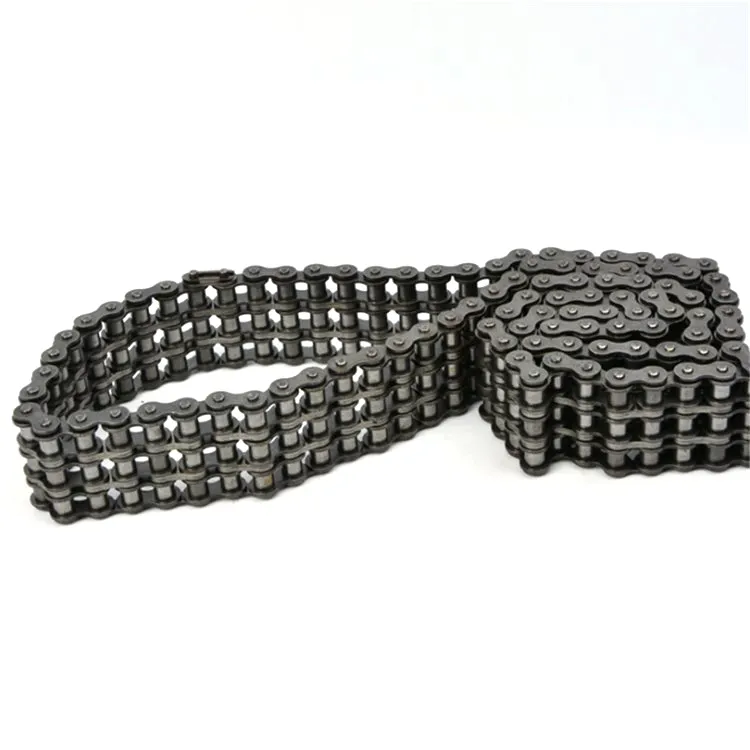
Können Antriebsketten in Textil- oder Webmaschinen eingesetzt werden?
Ja, Antriebsketten können in Textil- oder Webmaschinen eingesetzt werden. Hier ist eine ausführliche Antwort auf die Frage:
Textil- und Webereimaschinen benötigen häufig zuverlässige und effiziente Kraftübertragungssysteme, um verschiedene Komponenten und Mechanismen anzutreiben. Antriebsketten eignen sich aufgrund ihrer Langlebigkeit, Festigkeit und Vielseitigkeit hervorragend für diese Anwendungen.
Antriebsketten werden in Textil- und Webereimaschinen üblicherweise für folgende Zwecke eingesetzt:
1. Kraftübertragung: Antriebsketten übertragen die Drehbewegung des Motors auf verschiedene Komponenten der Textil- oder Webmaschine. Sie treiben die Hauptwelle, die Webstuhlmechanismen, die Aufwickelhaspeln, die Kettbäume und andere bewegliche Teile an.
2. Spannung und Positionierung: In Webmaschinen werden Übertragungsketten eingesetzt, um die korrekte Spannung der Kettfäden aufrechtzuerhalten. Sie tragen zur präzisen Positionierung des Kettbaums und zur Gewährleistung einer gleichmäßigen Spannung während des gesamten Webprozesses bei.
3. Fachbildungsmechanismen: Bei Jacquardwebstühlen und anderen modernen Webmaschinen spielen Antriebsketten eine entscheidende Rolle für den Betrieb der Fachbildungsmechanismen. Diese Mechanismen steuern das Heben und Senken der Kettfäden, um Muster und Designs im Gewebe zu erzeugen.
4. Garnzuführung: Antriebsketten treiben Garnzuführungsmechanismen wie Garnträger oder Garnführungen an und gewährleisten so eine gleichmäßige und kontrollierte Garnzuführung während des Webprozesses.
5. Synchronisation: In komplexen Textilmaschinen werden Antriebsketten eingesetzt, um die Bewegung verschiedener Maschinenkomponenten zu synchronisieren. Dies trägt zu einer präzisen Koordination zwischen Webstuhlmechanismen, Anschlagvorgang, Schusseintrag und anderen kritischen Arbeitsschritten bei.
Zu den Vorteilen des Einsatzes von Antriebsketten in Textil- oder Webmaschinen gehören:
– Hohe Strapazierfähigkeit und Verschleißfestigkeit ermöglichen eine lange Lebensdauer auch unter anspruchsvollen Bedingungen in der Textilherstellung.
– Fähigkeit, hohe Lasten zu bewältigen und Energie effizient zu übertragen, wodurch der reibungslose Betrieb verschiedener Maschinenkomponenten ermöglicht wird.
– Vielseitigkeit zur Anpassung an verschiedene Webtechniken, Webstuhlgrößen und Maschinenkonfigurationen.
– Verfügbarkeit einer breiten Palette von Kettenarten, -größen und -materialien, um spezifischen Anwendungsanforderungen gerecht zu werden.
– Einfache Wartung und Austauschbarkeit gewährleisten minimale Ausfallzeiten und eine effiziente Produktion.
Antriebsketten sind ein wesentlicher Bestandteil von Textil- und Webmaschinen und gewährleisten eine zuverlässige Kraftübertragung, präzise Synchronisierung und einen effizienten Betrieb. Hersteller und Konstrukteure von Textilmaschinen integrieren Antriebsketten häufig in ihre Anlagen, um eine gleichbleibend hohe Qualität der Stoffproduktion sicherzustellen.

Können Antriebsketten in Automobilen oder Motorrädern eingesetzt werden?
Antriebsketten können tatsächlich in Pkw und Motorrädern eingesetzt werden. Hier ist eine ausführliche Antwort auf die Frage:
Anwendungen im Automobil- und Motorradbereich erfordern häufig eine zuverlässige und effiziente Kraftübertragung, um das Drehmoment vom Motor auf die Räder zu übertragen. Antriebsketten bieten mehrere Vorteile, die sie für diese Anwendungen geeignet machen:
1. Hohe Festigkeit: Antriebsketten sind so konstruiert, dass sie hohen Drehmoment- und Leistungsanforderungen standhalten und sich daher für die anspruchsvollen Bedingungen von Kraftübertragungssystemen in Automobilen und Motorrädern eignen.
2. Effiziente Kraftübertragung: Antriebsketten ermöglichen eine direkte und effiziente Kraftübertragung vom Motor auf die Räder. Dank geringer Reibungsverluste wird eine effektive Kraftübertragung und optimale Leistung gewährleistet.
3. Kompakte Bauweise: Antriebsketten zeichnen sich durch ihre kompakte Bauweise aus und eignen sich daher ideal für den begrenzten Platz in Automobil- und Motorradanwendungen. Sie lassen sich problemlos in den Antriebsstrang integrieren, ohne übermäßig viel Platz zu beanspruchen.
4. Breiter Geschwindigkeitsbereich: Antriebsketten arbeiten effektiv über einen breiten Geschwindigkeitsbereich und erfüllen so die unterschiedlichen Geschwindigkeitsanforderungen von Automobil- und Motorradanwendungen.
5. Vielseitigkeit: Antriebsketten können in verschiedenen Arten von Automobil- und Motorradgetrieben eingesetzt werden, darunter Schaltgetriebe, Automatikgetriebe und Achsantriebssysteme.
6. Langlebigkeit: Antriebsketten sind so konstruiert, dass sie den anspruchsvollen Bedingungen im Automobil- und Motorradbereich standhalten. Sie sind verschleiß-, ermüdungs- und korrosionsbeständig und gewährleisten so dauerhafte Leistung und Zuverlässigkeit.
7. Kostengünstig: Antriebsketten bieten eine kostengünstige Lösung für die Kraftübertragung in Automobil- und Motorradanwendungen. Sie sind in der Regel günstiger als alternative Übertragungssysteme.
Bei der Auswahl einer Antriebskette ist es wichtig zu beachten, dass die spezifische Konstruktion und die Anforderungen des jeweiligen Getriebesystems von Kraftfahrzeugen oder Motorrädern berücksichtigt werden müssen. Ordnungsgemäße Wartung, Schmierung und regelmäßige Inspektion sind ebenfalls entscheidend für die Leistungsfähigkeit und Lebensdauer der Kette in diesen Anwendungen.
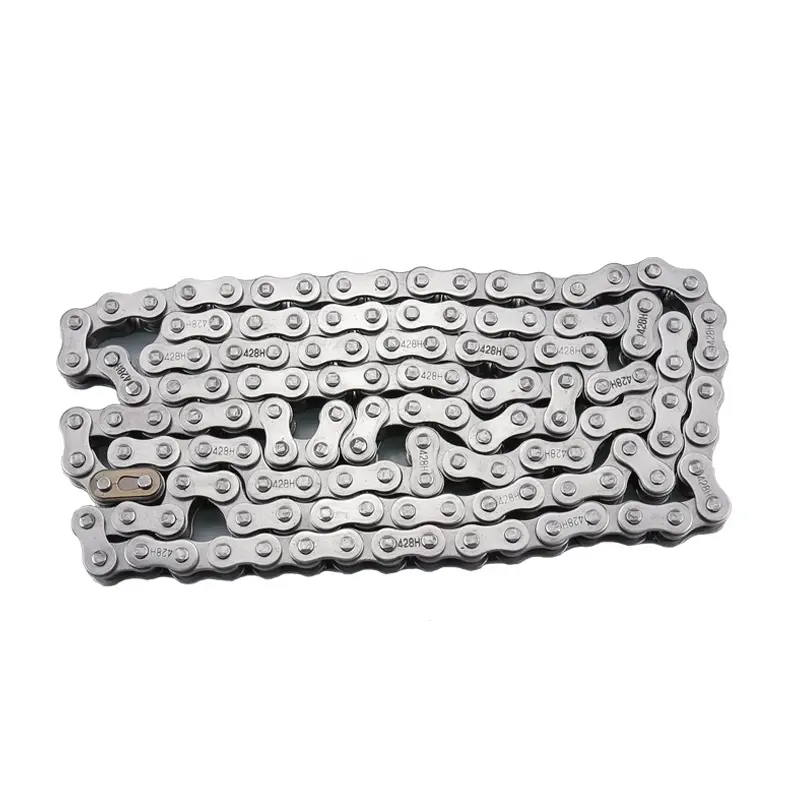
Was sind die häufigsten Ursachen für Ausfälle in Antriebsketten?
Antriebsketten unterliegen verschiedenen Faktoren, die im Laufe der Zeit zu ihrem Ausfall beitragen können. Hier eine detaillierte Erklärung:
1. Unzureichende Schmierung: Unzureichende oder unsachgemäße Schmierung ist eine der Hauptursachen für Kettenausfälle. Sie kann zu erhöhter Reibung, Wärmeentwicklung und beschleunigtem Verschleiß der Kettenkomponenten wie Bolzen, Buchsen und Rollen führen.
2. Verschmutzung: Verunreinigungen wie Schmutz, Staub, Ablagerungen und Feuchtigkeit können in das Kettensystem eindringen, dessen Leistung beeinträchtigen und zu beschleunigtem Verschleiß führen. Verunreinigungen können die Schmierung behindern, die Reibung erhöhen und Korrosion verursachen, was letztendlich zum Kettenbruch führen kann.
3. Überlastung: Eine Überlastung, die die Nennkapazität der Kette überschreitet, führt zu Spannungen und Verformungen der Kettenkomponenten. Dies kann Kettenlängung, beschleunigten Verschleiß und letztendlich Kettenbruch zur Folge haben.
4. Fehlausrichtung: Eine fehlerhafte Ausrichtung von Kette und Kettenrädern kann zu einer ungleichmäßigen Kraftverteilung führen, was lokalen Verschleiß und erhöhte Belastung bestimmter Kettenbereiche zur Folge hat. Fehlausrichtungen können durch unsachgemäße Montage oder Verschleiß der Kettenräder entstehen und vorzeitigen Kettenbruch verursachen.
5. Ermüdung: Wiederholte zyklische Belastungen und Spannungen können zu Ermüdung der Kette führen, was Risse, Brüche und letztendlich den Kettenbruch zur Folge haben kann. Ermüdungsbrüche treten mit höherer Wahrscheinlichkeit auf, wenn die Kette hohen Drehzahlen oder hohen Frequenzen ausgesetzt ist.
6. Korrosion: Die Einwirkung korrosiver Umgebungen wie hoher Luftfeuchtigkeit, Chemikalien oder extremer Temperaturen kann Korrosion an den Kettenkomponenten verursachen. Korrosion schwächt die strukturelle Integrität der Kette und führt zu vorzeitigem Ausfall.
7. Mangelhafte Wartung: Unzureichende Wartungspraktiken, wie seltene Inspektionen, fehlende Schmierung und das Ignorieren potenzieller Probleme, können zu Kettenausfällen führen. Regelmäßige Wartung, einschließlich Schmierung, Reinigung und korrekter Kettenspannung, ist für die Langlebigkeit und zuverlässige Funktion von Antriebsketten unerlässlich.
Um Kettenbrüche zu vermeiden, ist es wichtig, diese Faktoren zu berücksichtigen. Ausreichende Schmierung, regelmäßige Inspektionen, Reinigung und Ausrichtungskontrollen sind unerlässliche Wartungsmaßnahmen. Die Auswahl der richtigen Kette für den jeweiligen Anwendungsfall, die Einhaltung der Herstellervorgaben und die Beachtung von Industriestandards tragen ebenfalls dazu bei, das Ausfallrisiko zu minimieren und die optimale Leistung und Lebensdauer der Antriebskette zu gewährleisten.


Bearbeitet von CX am 06.05.2024