Produktbeschreibung
Antriebsketten aus Edelstahl mit doppelter Teilung und oberen Rollen
Edelstahl-Doppelteilungs-Förderkette mit oberer Rolle
Die Doppelteilungs-Förderkette mit Oberrolle ist die am häufigsten verwendete Kettenantriebsart zur Übertragung mechanischer Kraft bei vielen Haushalts-, Industrie- und Landwirtschaftsmaschinen (einschließlich Förderbändern, Drahtziehmaschinen und Rohrziehmaschinen, Druckmaschinen, Automobilen, Motorrädern und Fahrrädern).
Das Produkt besteht aus hochwertigem legiertem Stahl. Die Bleche werden mit Präzisionstechnologie gestanzt und extrudiert. Bolzen, Buchsen und Rollen werden mit hocheffizienten automatischen Anlagen und Schleifmaschinen bearbeitet und anschließend einer Einsatzhärtung, einem Schutzgas-Durchlaufofen und einer Oberflächensandstrahlung unterzogen. Die hohe Montagegenauigkeit der Innenbohrungen und die Drucknietverbindungen gewährleisten die einwandfreie Funktion der gesamten Kette.
Wir bei HZPT sind stolz darauf, unseren Kunden die hochwertigste Doppelteilungs-Förderkette mit Oberrolle anbieten zu können.
Es besteht aus einer Reihe kurzer zylindrischer Rollen, die durch seitliche Verbindungsstangen miteinander verbunden sind. Es setzt sich zusammen aus einem/einer
Kettenrad. Es ist eine einfache, zuverlässige und effiziente Kraftübertragungsmethode. Zahnhärtung, Stanzen und Oberflächenbehandlung erfolgen nach Kundenwunsch. Alle Kurzketten im Lager unterliegen strengen Qualitätskontrollen, um Ihren Anforderungen gerecht zu werden.
Wir sind spezialisiert auf die Herstellung von Rollenketten für die Landwirtschaft, Flachketten, Hohlzapfenketten, Förderketten für Bierabfüll- und Verpackungsanlagen, Straßenfertigerketten, Hebeketten für Hilfsträger, Schaufelketten (Zementwerksketten), geschmiedete Schaberketten, Verladeketten für die Automobilindustrie, Verladeketten für die Metallindustrie, Transportketten für Bergbaumaschinen, Grabenfräsenketten, Ketten für Zuckerfabriken, Doppelflexketten usw. Kontaktieren Sie uns gerne telefonisch oder per E-Mail für eine Beratung!
Verwandte Produkte
Wir liefern auch passende Kettenräder zu Ihren Ketten.
Kontaktieren Sie uns: Wir kümmern uns um unsere geschätzten Kunden. Bei Fragen hilft Ihnen unser Kundenservice gerne weiter. Wir bemühen uns, Ihre E-Mails so schnell wie möglich zu beantworten. Aufgrund des hohen E-Mail-Aufkommens und der Zeitverschiebung kann es jedoch vorkommen, dass wir nicht sofort antworten können. Bitte geben Sie uns 24 Stunden Zeit für eine Antwort.
Wir sind spezialisiert auf die Herstellung von Agrarrollenketten, Flachketten, Schienenketten, Hohlzapfenketten, Förderketten für Bierabfüll- und Verpackungsanlagen, Fertigerketten, Anbauketten für Seitenaufzüge, Becherwerksketten (Zementwerksketten), Schaberketten für Schmiedeanlagen, Verladeketten für die Automobilindustrie, Verladeketten für die Metallindustrie, Förderketten für Bergbaumaschinen, Grabenfräsketten, Zuckermühlenketten, Doppelflexketten usw. Anfragen per Telefon oder E-Mail sind willkommen!
Verwandte Produkte
Unternehmen
| Verwendung: | Antriebskette, Schleppkette, Förderkette, Spezialkette |
|---|---|
| Material: | Eisen |
| Oberflächenbehandlung: | Ölblüte |
| Besonderheit: | Ölbeständig |
| Kettengröße: | 1/2" * 3/32" |
| Struktur: | Förderketten |
| Proben: |
US$ 9999/Stück
1 Stück (Mindestbestellmenge) | |
|---|
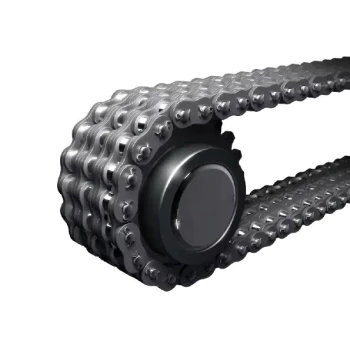
Wie beeinflusst die Materialhärte einer Antriebskette deren Haltbarkeit?
Die Materialhärte einer Antriebskette spielt eine entscheidende Rolle für ihre Haltbarkeit und Verschleißfestigkeit. Hier eine detaillierte Erklärung:
Die Materialhärte beschreibt die Fähigkeit eines Werkstoffs, Eindrücken, Abrieb und Eindringen durch äußere Kräfte zu widerstehen. Bei Antriebsketten beeinflusst die Härte der Kettenkomponenten, wie Bolzen, Buchsen und Rollen, direkt die Haltbarkeit und Lebensdauer der Kette.
Bei der Haltbarkeit von Antriebsketten spielen folgende Faktoren eine Rolle:
- Verschleißfestigkeit: Eine höhere Materialhärte führt in der Regel zu einer besseren Verschleißfestigkeit. Antriebsketten aus härteren Materialien widerstehen den im Betrieb auftretenden Reibungs- und Kontaktkräften und minimieren so den Verschleiß an kritischen Bauteilen. Dies verlängert die Lebensdauer der Kette und reduziert den Wartungsaufwand.
- Schlagfestigkeit: Die Materialhärte einer Antriebskette beeinflusst auch ihre Stoßfestigkeit. Ketten, die in Umgebungen mit häufigen Stößen oder Stoßbelastungen eingesetzt werden, wie beispielsweise im Bergbau oder bei Schwerlastanwendungen, benötigen hochharte Werkstoffe, um den plötzlichen Belastungen ohne Verformung oder Bruch standzuhalten.
- Widerstand gegen Verformung: Härtere Werkstoffe weisen eine höhere Verformungsbeständigkeit unter Last auf. Dies ist besonders wichtig bei Antriebsketten, wo ein präzises Ineinandergreifen der Kettenkomponenten für eine effiziente Kraftübertragung unerlässlich ist. Ketten mit höherer Materialhärte behalten ihre Form und Maßhaltigkeit, gewährleisten so eine gleichbleibende Leistung und minimieren das Risiko von Kettenlängung oder -fehlausrichtung.
- Korrosionsbeständigkeit: Die Materialhärte beeinflusst zwar primär die Verschleißfestigkeit, kann aber indirekt auch die Korrosionsbeständigkeit der Kette beeinflussen. Bestimmte hochharte Werkstoffe, wie Edelstahl oder spezielle Legierungen, bieten im Vergleich zu weicheren Werkstoffen eine verbesserte Korrosionsbeständigkeit. Dies ist besonders relevant für Anwendungen, bei denen die Kette korrosiven Umgebungen ausgesetzt ist, beispielsweise in der Schifffahrt oder der chemischen Industrie.
Es ist wichtig zu beachten, dass höhere Härte zwar im Allgemeinen zu verbesserter Haltbarkeit führt, übermäßige Härte jedoch auch Sprödigkeit und verringerte Schlagfestigkeit zur Folge haben kann. Daher muss ein ausgewogenes Verhältnis zwischen Härte und anderen mechanischen Eigenschaften gefunden werden, um optimale Leistung und Haltbarkeit der Antriebskette zu gewährleisten.
Hersteller legen üblicherweise den geeigneten Härtegrad für Antriebskettenkomponenten anhand der spezifischen Anwendungsanforderungen fest. Diese Spezifikationen berücksichtigen Faktoren wie Belastbarkeit, Betriebsbedingungen, zu erwartenden Verschleiß und die gewünschte Lebensdauer.
Regelmäßige Wartungsarbeiten wie die richtige Schmierung, periodische Inspektion und Spannungsanpassung sind unerlässlich, um die Lebensdauer und Leistungsfähigkeit der Antriebskette unabhängig von ihrer Materialhärte zu maximieren.
Durch die Auswahl einer Antriebskette mit der geeigneten Materialhärte und die Anwendung geeigneter Wartungspraktiken können die Betreiber eine optimale Haltbarkeit, eine verlängerte Lebensdauer der Kette und eine zuverlässige Kraftübertragung in verschiedenen industriellen Anwendungen gewährleisten.
Kann eine Antriebskette in der Textil- oder Bekleidungsherstellung eingesetzt werden?
Ja, Antriebsketten können in verschiedenen Anwendungen der Textil- und Bekleidungsherstellung eingesetzt werden. Hier eine detaillierte Erklärung:
In der Textil- und Bekleidungsherstellung sind Maschinen und Anlagen für Prozesse wie Spinnen, Weben, Stricken, Färben, Bedrucken und Konfektionieren unerlässlich. Antriebsketten bieten in diesen Anwendungen mehrere Vorteile:
- Präzise Kraftübertragung: Antriebsketten gewährleisten eine präzise Kraftübertragung und somit die genaue Bewegung und Synchronisierung der Maschinenkomponenten in der Textil- und Bekleidungsherstellung. Sie ermöglichen einen gleichmäßigen und zuverlässigen Betrieb während des gesamten Fertigungsprozesses.
- Hohe Belastbarkeit: Maschinen in der Textil- und Bekleidungsherstellung erfordern häufig den Umgang mit schweren Lasten, wie beispielsweise Stoff- oder Garnrollen. Antriebsketten zeichnen sich durch eine hohe Tragfähigkeit aus und eignen sich daher für Förder-, Hebe- und Antriebsmechanismen in der Materialhandhabung.
- Reibungsloser und zuverlässiger Betrieb: Antriebsketten gewährleisten einen reibungslosen und zuverlässigen Betrieb und minimieren das Risiko von plötzlichen Stopps oder ruckartigen Bewegungen, die die Qualität der Textil- oder Bekleidungsproduktion beeinträchtigen könnten. Sie sorgen für eine gleichmäßige Bewegung und präzise Steuerung der Maschinenkomponenten.
- Anpassungsoptionen: Antriebsketten lassen sich individuell an spezifische Anwendungen in der Textil- und Bekleidungsherstellung anpassen. Sie sind in verschiedenen Größen, Teilungen und Materialien erhältlich, um unterschiedlichen Belastungen, Geschwindigkeiten und Umgebungsbedingungen gerecht zu werden.
- Kompatibilität mit Zusatzkomponenten: Antriebsketten lassen sich problemlos mit Hilfskomponenten integrieren, die in Textil- und Bekleidungsmaschinen üblicherweise verwendet werden, wie z. B. Spannvorrichtungen, Führungen, Kettenräder und Lager. Dies ermöglicht eine effiziente und zuverlässige Kraftübertragung im gesamten System.
- Kosteneffizienz: Antriebsketten bieten eine kostengünstige Lösung für die Kraftübertragung in der Textil- und Bekleidungsindustrie. Sie zeichnen sich durch eine lange Lebensdauer, einen geringen Wartungsaufwand und niedrigere Ersatzteilkosten im Vergleich zu einigen alternativen Kraftübertragungssystemen aus.
Bei der Auswahl einer Antriebskette ist es wichtig, die spezifischen Anforderungen der jeweiligen Textil- oder Bekleidungsherstellung zu berücksichtigen. Faktoren wie Belastbarkeit, Geschwindigkeit, Umgebungsbedingungen und Wartungsaufwand sollten in die Überlegungen einbezogen werden.
Regelmäßige Wartungsarbeiten, einschließlich Inspektion, Schmierung und Spannungsanpassung, sind entscheidend, um eine optimale Leistung und Langlebigkeit der Antriebskette in Anwendungen der Textil- und Bekleidungsherstellung zu gewährleisten.
Durch den Einsatz von Antriebsketten in der Textil- und Bekleidungsherstellung profitieren die Bediener von einer präzisen Kraftübertragung, einem zuverlässigen Betrieb und effizienten Produktionsprozessen, was zu qualitativ hochwertigen Textil- und Bekleidungsprodukten beiträgt.
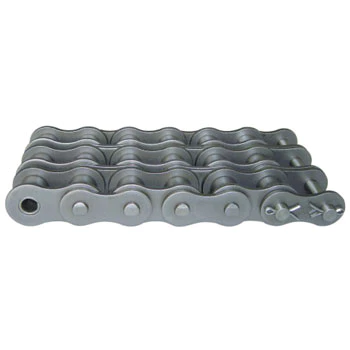
Welche Sicherheitsaspekte sind beim Arbeiten mit einer Antriebskette zu beachten?
Die Arbeit mit einer Antriebskette erfordert geeignete Sicherheitsvorkehrungen, um die Sicherheit der Personen und den sicheren Betrieb der Maschinen zu gewährleisten. Hier einige wichtige Sicherheitsaspekte:
- 1. Schutzausrüstung: Tragen Sie beim Arbeiten an Antriebsketten geeignete persönliche Schutzausrüstung (PSA) wie Handschuhe, Schutzbrille und Schutzkleidung. Dies schützt vor potenziellen Gefahren wie Quetschstellen, herumfliegenden Teilen oder dem Kontakt mit Schmierstoffen.
- 2. Sperren/Kennzeichnen: Vor der Durchführung von Wartungs- oder Reparaturarbeiten an der Antriebskette müssen die Sperr- und Kennzeichnungsverfahren befolgt werden, um die Maschine stromlos zu machen und zu isolieren. Dadurch wird eine unerwartete Stromzufuhr oder Bewegung der Kette verhindert und somit Unfälle oder Verletzungen vermieden.
- 3. Maschinenschutz: Stellen Sie sicher, dass Antriebsketten durch geeignete Abdeckungen oder Gehäuse ausreichend geschützt sind, um versehentlichen Kontakt mit beweglichen Teilen zu verhindern. Eine ordnungsgemäße Maschinensicherung trägt dazu bei, das Risiko von Verhedderungen oder Verletzungen durch die Antriebskette zu minimieren.
- 4. Richtige Spannung aufrechterhalten: Achten Sie auf die richtige Kettenspannung, um übermäßiges Spiel oder zu hohe Spannung zu vermeiden, da dies zu Kettenabspringen, plötzlichen Bewegungen oder Bauteilversagen führen kann. Befolgen Sie die Anweisungen des Herstellers zur Spannungseinstellung und stellen Sie sicher, dass diese sicher durchgeführt wird.
- 5. Angemessene Schulung und Verfahren: Stellen Sie sicher, dass alle Personen, die mit Antriebsketten arbeiten, in deren sicherer Bedienung, Wartung und den spezifischen Gefahren der Maschinen oder Geräte geschult sind. Erstellen und befolgen Sie Standardarbeitsanweisungen (SOPs) für alle Arbeiten an der Antriebskette.
- 6. Regelmäßige Inspektionen: Überprüfen Sie die Antriebskette regelmäßig auf Verschleiß, Beschädigungen oder Fehlausrichtung. Beheben Sie festgestellte Mängel umgehend, um Unfälle oder Geräteausfälle zu vermeiden.
- 7. Wartung und Schmierung: Um einen reibungslosen und effizienten Betrieb der Antriebskette zu gewährleisten, befolgen Sie die entsprechenden Wartungs- und Schmiervorschriften. Verwenden Sie geeignete Schmierstoffe und gehen Sie vorsichtig damit um, um das Risiko von Ausrutschen, Stürzen oder dem Kontakt mit Gefahrstoffen zu minimieren.
- 8. Sicheres Heben und Tragen: Beim Umgang mit oder Anheben schwerer Antriebskettenkomponenten sind geeignete Hebetechniken und -geräte anzuwenden, um Überlastungen oder Verletzungen zu vermeiden. Vermeiden Sie es, sich oder andere in Positionen zu begeben, in denen die Kette oder zugehörige Maschinenteile eingeklemmt oder gequetscht werden könnten.
Durch die Einhaltung dieser Sicherheitsvorkehrungen und deren Integration in die Arbeitsabläufe können die Risiken bei der Arbeit mit Antriebsketten minimiert und ein sicheres Arbeitsumfeld gefördert werden.


Bearbeitet von CX am 25.07.2023