Prozessaufgaben in Kettenanforderungen übersetzen
Most costly chain-drive mistakes begin when one visible symptom or one catalog dimension is treated as the whole problem. Packaging machines often combine fast cyclic motion with strict cleanliness and short maintenance windows. The best chain is not necessarily the largest; it is the one that holds alignment and pitch behavior while meeting the plant lubrication and sanitation rules.
Überprüfung der Sortiment an Kettenprodukten can save time, but only when the search is constrained by verified packaging machinery and clean chain drive. The engineering gate for this topic is to select from a chain rating method that includes the actual cyclic duty and speed; anything that fails that gate remains a hypothesis, not a released specification.
Map the machine motion profile: packaging drives can impose repeated dynamic loads even when the product itself is light.
Control pitch stability for indexing: joint wear changes effective pitch and can shift fixture or cam timing over long center distances.
- Packaging Machinery
- Prüfen Sie diesen Artikel anhand des physischen Laufwerks und der aktuellen Lieferantendaten, anstatt ihn anhand des Aussehens zu schätzen.
- Clean Chain Drive
- Mit diesem Parameter können Sie ungeeignete Optionen frühzeitig ablehnen und den verifizierten Wert anschließend für die endgültige Spezifikation beibehalten.
- Indexing
- Prüfen Sie diesen Punkt an der Maschine und dokumentieren Sie alle Unklarheiten, für die noch eine Zeichnung oder ein Handbuch des Lieferanten erforderlich ist.
- Maintenance-Free Chain
- Dokumentieren Sie diese Anforderung so, dass ein zweiter Techniker die gleiche Auswahl oder Diagnose reproduzieren kann.
- Washdown
- Diese Information sollte aus einer Zeichnung, einer Messung, einer Berechnung oder einem Betriebsprotokoll erfasst werden, bevor die Entscheidung getroffen wird.
Map the machine motion profile
Record continuous versus indexing motion, cycles per minute, accelerations, reversals, dwell, and synchronization requirements. Why it matters: packaging drives can impose repeated dynamic loads even when the product itself is light. Field nuance: short index moves create frequent acceleration events and backlash in neighboring mechanisms can amplify impact. Failure mode: using average motor power alone can miss cyclic fatigue demand.
Inspection: review servo or motor motion profiles, reducer ratios, and product timing and identify the maximum repetitive chain load. Release condition: select from a chain rating method that includes the actual cyclic duty and speed. Record the operating state and the reference points used for this check.
Define cleanliness and lubricant restrictions
Start by identify open product zones, packaging film, labels, sensors, washdown, and whether oil mist or drip is acceptable. The mechanism is standard roller chain benefits from lubrication but excess oil can contaminate package surfaces or interfere with adhesive and sensing. In practice, some maintenance-optimized or dry-running chain designs can reduce lubricant demand but have series-specific ratings. If the assumption is wrong, choosing a no-lube chain without checking load and speed can trade contamination risk for rapid wear.
Field check: map the chain path relative to product and cleaning areas and review permissible lubricants. Accept the step when you can select a chain and lubrication concept documented for both the mechanical duty and cleanliness requirement. Save the measured or observed condition so the result can be repeated later.
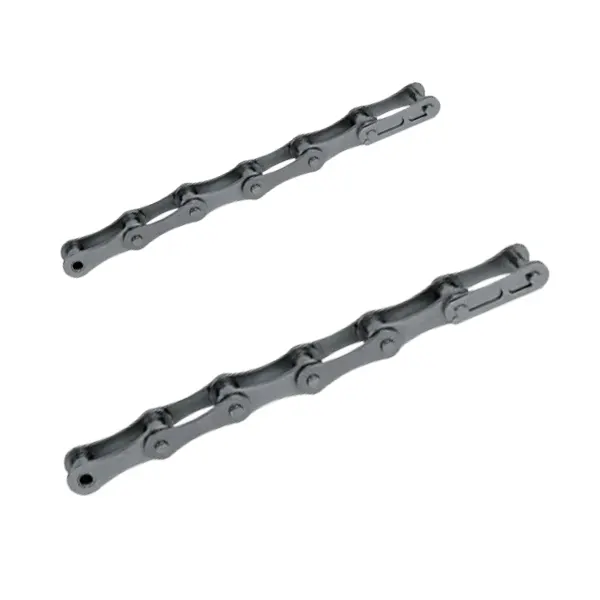
Control pitch stability for indexing
Use monitor wear elongation, sprocket condition, and chain tension where chain position affects timing. This controls the decision because joint wear changes effective pitch and can shift fixture or cam timing over long center distances. On the machine, packaging quality may deteriorate before the chain reaches a structural failure condition. The practical risk is waiting for obvious chain noise can allow register or transfer errors to increase.
Confirm it by doing this: define a measurement span and maximum timing or elongation condition linked to process tolerance. The evidence is sufficient when you can schedule adjustment or replacement before chain wear produces unacceptable indexing error. Note the tool, location, and operating condition with the result.
Use sprocket teeth and pitch to control dynamics
Work from prefer enough teeth and a pitch that provide smooth engagement within the compact machine envelope. The engineering link is small packaging frames tempt designers to use very small sprockets, which increases polygonal motion and articulation. One useful detail is that a smaller-pitch multi-strand chain can sometimes fit better than a coarse-pitch simplex drive. Otherwise, chasing minimum diameter can create vibration that affects product handling or sensors.
Verify at the drive: compare candidate sprocket diameters, tooth counts, chain speed, and noise at the actual cycle rate. Close this check only after you can choose the smoothest rated geometry that still fits guards and shafts. Keep photographs or dimensions when they help preserve the interface condition.
Design access for fast planned maintenance
Base the decision on provide visible connecting-link position, adjustment points, lubrication access, and removable guards that do not disturb machine alignment. It matters because packaging lines often have high downtime cost and maintenance windows are short. During service, a chain that requires lengthy disassembly to inspect or replace can dominate lifecycle cost. A poor assumption can cause poor access encourages skipped lubrication and rushed connecting-link work.
Use this confirmation: time the expected inspection, adjustment, and replacement tasks during a design review or shutdown rehearsal. Proceed when you can choose components and guards that allow repeatable maintenance without moving critical machine datums. If readings vary around the chain or sprocket, retain the spread instead of hiding it in one average.

Protect against washdown and chemical exposure
The controlling action is to check stainless, coated, or specialty chain and sprocket materials against cleaning chemistry, water, temperature, and corrosion risk. Its significance comes from washdown can remove lubricant and leave moisture trapped in joints or guards. In the field, corrosion-resistant outer surfaces do not guarantee adequate wear performance at the pin-bushing joint. The failure consequence is selecting material on rust resistance alone can reduce mechanical capacity or contaminate product through unsuitable lubricant.
Check the hardware directly: collect sanitation chemical concentrations and temperatures and inspect drainage around the chain path. Approval requires that you can verify chain, sprockets, lubricant, and guard materials for the complete cleaning cycle. Write down any uncertainty that still needs a drawing, manual, or supplier response.
Tabelle zur Anwendungsprüfung
| Entscheidungspunkt | Inspektion oder Berechnung | Akzeptanznachweis |
|---|---|---|
| Map the machine motion profile | review servo or motor motion profiles, reducer ratios, and product timing and identify the maximum repetitive chain load | select from a chain rating method that includes the actual cyclic duty and speed |
| Define cleanliness and lubricant restrictions | map the chain path relative to product and cleaning areas and review permissible lubricants | select a chain and lubrication concept documented for both the mechanical duty and cleanliness requirement |
| Control pitch stability for indexing | define a measurement span and maximum timing or elongation condition linked to process tolerance | schedule adjustment or replacement before chain wear produces unacceptable indexing error |
| Use sprocket teeth and pitch to control dynamics | compare candidate sprocket diameters, tooth counts, chain speed, and noise at the actual cycle rate | choose the smoothest rated geometry that still fits guards and shafts |
| Design access for fast planned maintenance | time the expected inspection, adjustment, and replacement tasks during a design review or shutdown rehearsal | choose components and guards that allow repeatable maintenance without moving critical machine datums |
| Protect against washdown and chemical exposure | collect sanitation chemical concentrations and temperatures and inspect drainage around the chain path | verify chain, sprockets, lubricant, and guard materials for the complete cleaning cycle |
| For this article, do not close the job until the packaging machinery evidence and every critical mating interface are recorded together. | ||
Die Komponentenauswahl ist am effektivsten, wenn die Kette nicht isoliert betrachtet wird. review chain-driven packaging conveyor context offers related drive chain for packaging machinery context; keep the final engineering check tied to the exact standard family, manufacturer table, and measured installation.
Anwendungsrisiken, die eine sorgfältige Planung erfordern
Release check: select from a chain rating method that includes the actual cyclic duty and speed.
Release check: select a chain and lubrication concept documented for both the mechanical duty and cleanliness requirement.
Release check: schedule adjustment or replacement before chain wear produces unacceptable indexing error.
Release check: choose the smoothest rated geometry that still fits guards and shafts.
Häufig gestellte Fragen zur Bewerbung
Veröffentlichen Sie die Anwendungsspezifikation mit den Betriebsgrenzen
The strongest handoff for this application topic is a short evidence package: verified packaging machinery, verified clean chain drive, the result of “Protect against washdown and chemical exposure,” and the exact source of any chain-series-specific limit. Broader alternatives on the Lösungen für Kraftübertragungsketten sollte mit dem jeweiligen Produktpaket verglichen werden und nicht mit allgemeinen Katalogbeschreibungen.
For drive chain for packaging machinery, if indexing has not been verified, send the application data to the chain engineering team with the evidence collected in the preceding checks. State the operating condition, measured dimensions, current sprocket condition, and intended maintenance or design action so the remaining check can be closed before the machine returns to service.
Send the operating condition, packaging machinery, clean chain drive, layout evidence, and the unresolved interface so the next decision is based on machine data rather than assumption.