Product Description
Products Collection
Product Description
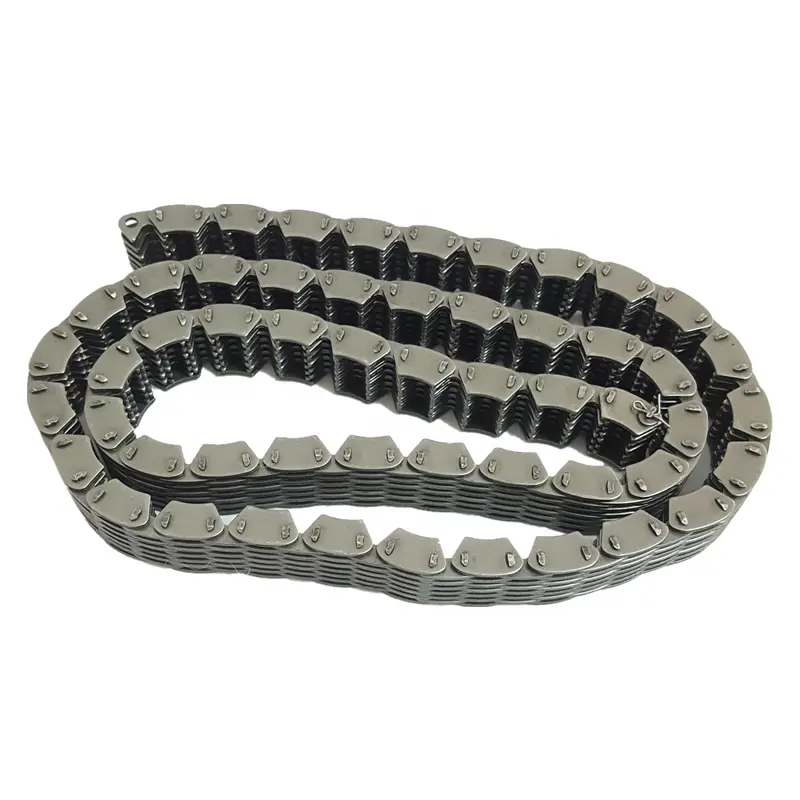
QLZ Chains feature symmetrically toothed link plates on both sides, enabling equal performance and precision during bilateral use. This design makes it an ideal solution for applications with changes in the direction of rotation or for multi-shaft drives. Their flexibility ensures they can easily handle these situations, providing reliable and consistent performance.
When you need a specific design, we can provide customised solutions based on what you need. Whether you require specific features, plans, materials, or specifications, our team can work to ensure you get a chain that fully meets your needs.
Are you looking for other chains?
Leave your message below, and feel free to contact us!
FAQ
| Question 1: Are you a Manufacturer or a Trading Company? |
| Answer: We are a 100% chain manufacturer with 23 years of experience |
| Question 2: What should I provide to get a quotation? |
| Answer: 1. Type of the chain (with photos if available) 2. Pitch of the chain 3. Width of the chain 4. Length and quantity of the chain 5. Other specific requirements |
| Question 3: How long is your manufacturing and delivery time? |
| Answer: Products are usually finished in 2 weeks, depending on the type and quantity. Also, please get in touch with us to check the delivery time to your destination. |
| Question 4: How long is your guaranteed time? |
| Answer: We offer a three-year guarantee if you purchase chains and matched sprockets together. If you need chains only, a one-year guarantee can also be confirmed. |
| Question 5: Trade terms and Payment terms? |
| Answer: We accept EXW, FOB, DDU, Door to Door. Payment terms, such as T/T, L/C, and Western Union, are acceptable. We also provide the service of Online Trading in this B2B platform. |
Company Profile
| Standard or Nonstandard: | Standard |
|---|---|
| Application: | Textile Machinery, Garment Machinery, Conveyer Equipment, Packaging Machinery, Food Machinery, Marine, Mining Equipment, Agricultural Machinery |
| Structure: | Tooth Chain |
| Samples: |
US$ 100/Meter
1 Meter(Min.Order) | Order Sample |
|---|
| Customization: |
Available
| Customized Request |
|---|
.shipping-cost-tm .tm-status-off{background: none;padding:0;color: #1470cc}
|
Shipping Cost:
Estimated freight per unit. |
about shipping cost and estimated delivery time. |
|---|
| Payment Method: |
|
|---|---|
|
Initial Payment Full Payment |
| Currency: | US$ |
|---|
| Return&refunds: | You can apply for a refund up to 30 days after receipt of the products. |
|---|
Can transmission chains be used in marine or offshore applications?
Yes, transmission chains can be used in marine or offshore applications. Here’s a detailed answer to the question:
1. Corrosion Resistance: Transmission chains used in marine or offshore applications are typically made from materials that offer high corrosion resistance, such as stainless steel or specially coated chains. These chains are designed to withstand the corrosive effects of s altwater, moisture, and other harsh environmental conditions.
2. Sealing and Protection: In marine or offshore environments, transmission chains are often equipped with additional sealing and protection measures. This can include seals, covers, or special coatings that provide an extra layer of defense against water, debris, and contaminants.
3. High Load Capacity: Marine and offshore applications often involve heavy-duty operations, such as lifting or pulling heavy loads. Transmission chains used in these applications are designed to handle high loads and provide reliable power transmission.
4. Resistance to Harsh Conditions: Marine and offshore environments can be challenging, with factors like high humidity, extreme temperatures, and exposure to s altwater and abrasive substances. Transmission chains for these applications are engineered to withstand these harsh conditions and maintain their performance and durability.
5. Compliance with Industry Standards: Transmission chains used in marine or offshore applications may need to meet specific industry standards and regulations. These standards ensure that the chains are suitable for the demanding conditions and safety requirements of the marine and offshore industries.
It’s important to select transmission chains specifically designed for marine or offshore applications to ensure reliable and long-lasting performance. Consulting with experts in the field and following manufacturer guidelines for installation, maintenance, and inspection is essential to maximize the effectiveness and lifespan of the transmission chains in these environments.

How does the choice of lubrication method impact the performance of a transmission chain?
The choice of lubrication method plays a crucial role in the performance and longevity of a transmission chain. Here’s a detailed answer to the question:
1. Reduced Friction and Wear: Proper lubrication ensures a thin film of lubricant between the moving parts of the transmission chain, reducing friction and minimizing wear. This helps to maintain the integrity of the chain’s components, such as pins, rollers, and bushings, by preventing metal-to-metal contact and reducing surface damage.
2. Heat Dissipation: Lubrication helps in dissipating heat generated during the operation of the transmission chain. By reducing friction and providing a cooling effect, the lubricant helps to prevent overheating, which can lead to premature wear, deformation, or failure of the chain.
3. Corrosion Protection: Lubricants often contain additives that offer corrosion protection to the transmission chain. These additives create a protective barrier against moisture, chemicals, and other corrosive elements, preventing rust formation and maintaining the chain’s performance in corrosive environments.
4. Noise Reduction: Adequate lubrication reduces the noise generated by the movement of the transmission chain. The lubricant acts as a cushion between the contacting surfaces, dampening vibrations and minimizing the noise levels produced during operation. This contributes to a quieter and smoother chain operation.
5. Extended Lifespan: Proper lubrication helps to extend the lifespan of the transmission chain. By reducing friction, wear, and the accumulation of debris, lubrication minimizes the stress on the chain’s components, resulting in improved durability and reduced likelihood of premature failure.
6. Operational Efficiency: A well-lubricated transmission chain operates with higher efficiency. With reduced friction, the chain experiences less power loss, enabling more effective power transmission. This leads to improved overall system efficiency, reduced energy consumption, and lower operating costs.
7. Contamination Prevention: Lubrication acts as a barrier, preventing contaminants, such as dust, dirt, and debris, from entering the chain’s components. This helps to maintain the cleanliness of the chain, reducing the risk of abrasive wear and preserving the integrity of its parts.
It’s important to consider the specific operating conditions, such as temperature, speed, load, and environment, when selecting the lubrication method for a transmission chain. Factors such as the viscosity, temperature range, and compatibility of the lubricant with the chain material should be taken into account to ensure optimal lubrication performance.
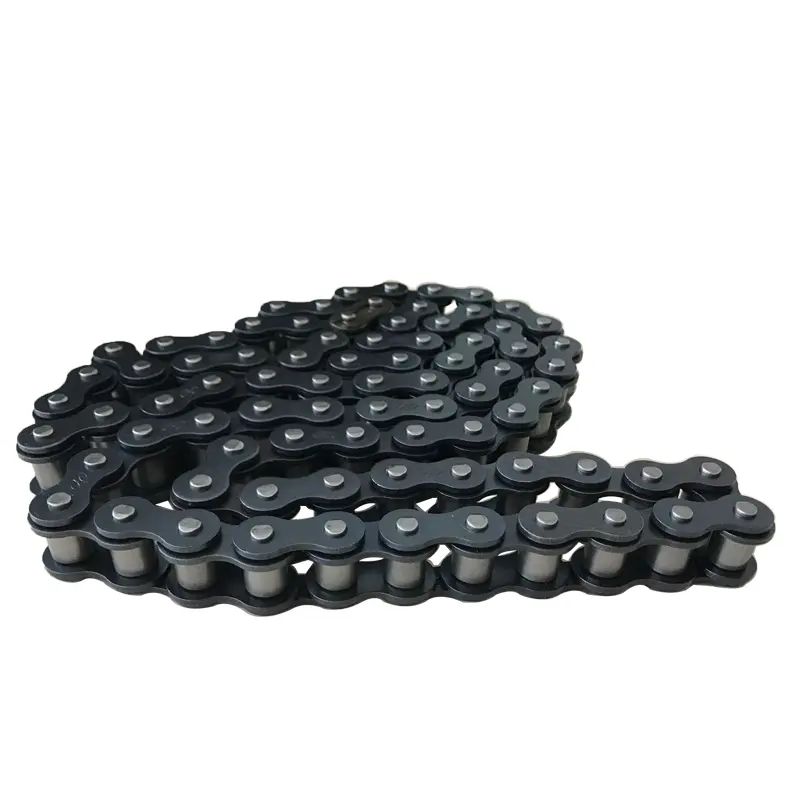
What is a transmission chain and how does it work?
A transmission chain is a type of mechanical chain used to transmit power between two or more rotating shafts. It consists of a series of interconnected links that engage with toothed sprockets to transfer motion and torque.
In a typical transmission chain system, the chain wraps around two or more sprockets, with one sprocket connected to the input shaft and the other(s) connected to the output shaft(s). As the input shaft rotates, the chain moves along the sprockets, causing the output shaft(s) to rotate at the same speed or different speeds depending on the sprocket sizes.
The functioning of a transmission chain relies on the principle of mechanical power transmission through interlocking links and the engagement between the chain and the sprocket teeth. The chain’s links are designed to fit precisely with the sprocket teeth, ensuring a positive and reliable transfer of power.
As the chain engages with the sprockets, the teeth on the sprockets push against the chain’s rollers or pins, causing the chain to move. This movement transfers rotational motion and torque from the input shaft to the output shaft(s), enabling the transmission of power and facilitating various mechanical operations.
Transmission chains are widely used in various applications such as automotive engines, motorcycles, bicycles, industrial machinery, and power transmission systems. They are valued for their durability, efficiency, and ability to handle high loads and speeds.


editor by CX 2023-11-01