Product Description
Products Collection
Product Description
QLV silent chains are our top-of-the-line solution for your power transmission needs. These chains are designed to offer exceptional performance, efficiency, and noise reduction for machine running.
These chains are made from high-strength steel, with linked plates and pins that fit together tightly to minimise noise and vibration during operation. They can transfer power more effectively than other chains without sacrificing noise reduction
When you need a specific design, we can provide customised solutions based on what you need. Whether you require specific features, plans, materials, or specifications, our team can work to ensure you get a chain that fully meets your needs.
Are you looking for other chains?
Leave your message below, and feel free to contact us!
FAQ
| Question 1: Are you a Manufacturer or a Trading Company? |
| Answer: We are a 100% chain manufacturer with 23 years of experience |
| Question 2: What should I provide to get a quotation? |
| Answer: 1. Type of the chain (with photos if available) 2. Pitch of the chain 3. Width of the chain 4. Length and quantity of the chain 5. Other specific requirements |
| Question 3: How long is your manufacturing and delivery time? |
| Answer: Products are usually finished in 2 weeks, depending on the type and quantity. Also, please get in touch with us to check the delivery time to your destination. |
| Question 4: How long is your guaranteed time? |
| Answer: We offer a three-year guarantee if you purchase chains and matched sprockets together. If you need chains only, a one-year guarantee can also be confirmed. |
| Question 5: Trade terms and Payment terms? |
| Answer: We accept EXW, FOB, DDU, Door to Door. Payment terms, such as T/T, L/C, and Western Union, are acceptable. We also provide the service of Online Trading in this B2B platform. |
Company Profile
|
Shipping Cost:
Estimated freight per unit. |
To be negotiated |
|---|
| Standard or Nonstandard: | Standard |
|---|---|
| Application: | Textile Machinery, Garment Machinery, Conveyer Equipment, Packaging Machinery, Food Machinery, Marine, Mining Equipment, Agricultural Machinery |
| Material: | Carbon Steel |
| Samples: |
US$ 100/Meter
1 Meter(Min.Order) | Order Sample |
|---|
| Customization: |
Available
| Customized Request |
|---|
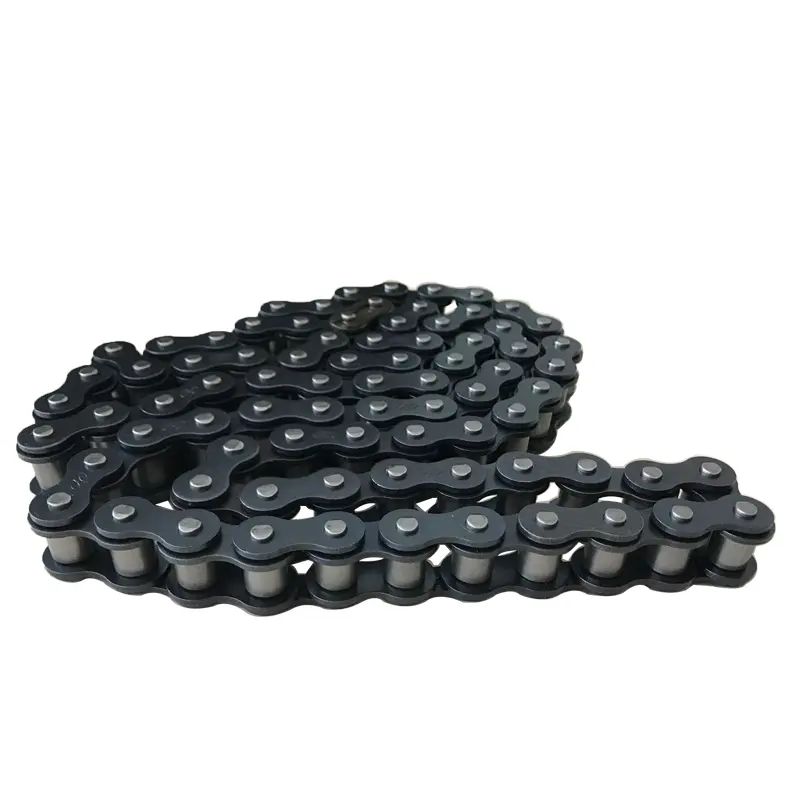
How does the design of a transmission chain impact its efficiency?
The design of a transmission chain plays a crucial role in determining its efficiency and overall performance. Here’s a detailed explanation:
1. Link Shape and Geometry: The shape and geometry of the chain links directly affect the efficiency of power transmission. Chains with optimized link designs, such as streamlined or curved profiles, reduce friction and minimize energy losses during operation. These design features enhance the chain’s efficiency and contribute to smoother power transfer.
2. Bearing Surfaces: The design and quality of bearing surfaces in a transmission chain significantly impact its efficiency. Well-designed chains incorporate precision-machined bearing surfaces that minimize friction and wear. Smooth and accurately machined surfaces reduce energy losses caused by friction, resulting in higher efficiency and improved overall performance.
3. Roller and Bushing Design: The design of the rollers and bushings in a transmission chain can greatly influence its efficiency. Chains with properly designed rollers and bushings reduce friction and enable smooth rotation. Low-friction contact surfaces between the rollers and sprockets ensure efficient power transmission, reducing energy waste and improving the overall efficiency of the chain.
4. Lubrication System: The design of the lubrication system within the chain also affects its efficiency. Proper lubrication reduces friction and wear, allowing the chain to operate more efficiently. Some transmission chains incorporate self-lubricating features or advanced lubrication mechanisms to ensure optimal lubrication throughout the chain, further improving efficiency.
5. Material Selection: The choice of materials for the chain’s components, such as links, rollers, and bushings, impacts its efficiency. High-quality materials with excellent wear resistance and low friction coefficients contribute to higher efficiency. Additionally, lightweight materials can reduce the overall weight of the chain, resulting in lower inertia and improved efficiency.
6. Precision Manufacturing: The precision and accuracy with which a transmission chain is manufactured can directly affect its efficiency. Chains produced with tight tolerances and high-quality manufacturing processes ensure proper fit, reduced friction, and optimal power transfer, resulting in improved efficiency.
It is important to note that the design considerations and features mentioned above can vary depending on the specific type and application of the transmission chain. Consulting with experts or manufacturers can provide further insights into the design features that optimize efficiency for a particular transmission chain.
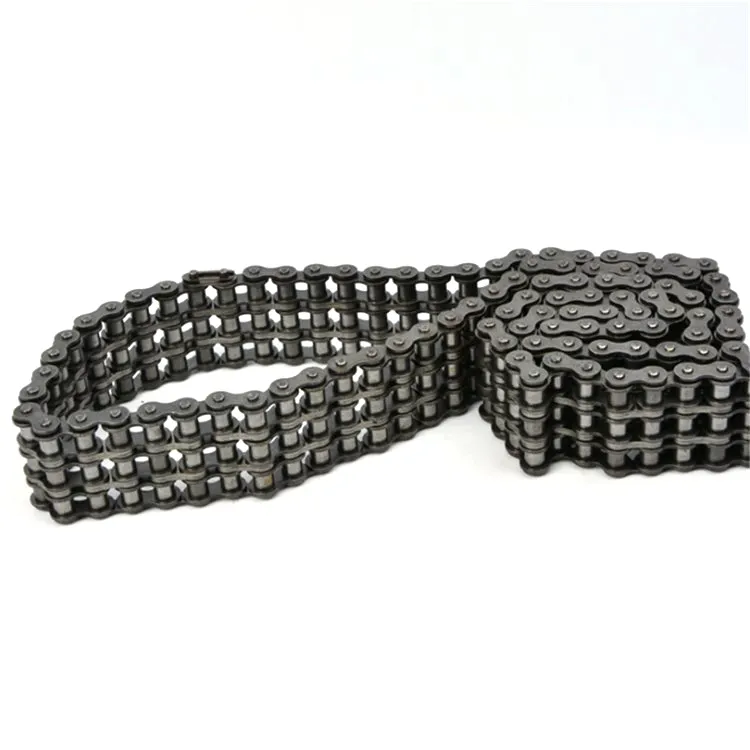
What are the advantages of using a flame-retardant transmission chain?
Flame-retardant transmission chains offer specific benefits in certain applications where fire safety is a concern. Here’s a detailed answer to the question:
1. Fire Protection: The primary advantage of using a flame-retardant transmission chain is enhanced fire protection. These chains are designed with materials and coatings that have high resistance to ignition and flame spread. In the event of a fire, they help to minimize the risk of the chain contributing to the spread of flames.
2. Safety: Flame-retardant transmission chains contribute to overall safety in environments where fire hazards are present. By reducing the flammability of the chain, they help prevent the chain from igniting or sustaining a fire, protecting personnel and property.
3. Compliance with Fire Regulations: In industries or applications where fire safety regulations are stringent, using flame-retardant transmission chains ensures compliance with these requirements. It helps to meet the necessary standards and regulations for fire prevention and protection.
4. Extended Escape Time: In situations where personnel may need to evacuate quickly during a fire, flame-retardant transmission chains can provide valuable additional time for safe evacuation. By resisting ignition and flame propagation, they help maintain structural integrity and delay the spread of fire.
5. Property Protection: Flame-retardant transmission chains help protect valuable equipment, machinery, and assets from fire damage. By reducing the risk of the chain catching fire, they minimize the potential for equipment failure and subsequent loss or damage.
It’s important to note that flame-retardant transmission chains may have specific design considerations and limitations. They are typically used in applications where fire safety is critical, such as in transportation systems, aerospace, mining, and other industries where the risk of fire is high. Selecting the appropriate flame-retardant chain requires considering the specific requirements of the application and ensuring compliance with relevant fire safety standards and regulations.
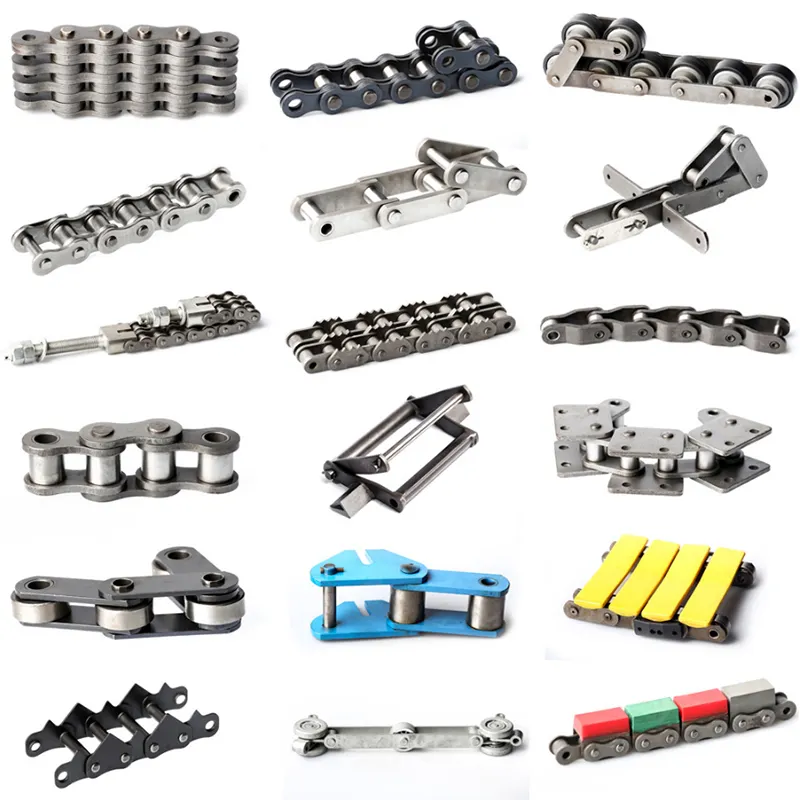
What materials are commonly used in manufacturing transmission chains?
Transmission chains are manufactured using various materials, each offering different properties and advantages. The choice of material depends on the specific application requirements, including load capacity, wear resistance, and environmental conditions. Here are some commonly used materials in the manufacturing of transmission chains:
- Carbon Steel: Carbon steel is a popular choice for transmission chains due to its excellent strength, durability, and affordability. It provides good wear resistance and can handle moderate loads.
- Stainless Steel: Stainless steel chains are highly resistant to corrosion and offer superior durability in challenging environments. They are commonly used in industries where cleanliness and hygiene are critical, such as food processing and pharmaceuticals.
- Alloy Steel: Alloy steel chains are alloyed with various elements to enhance their mechanical properties. They offer higher strength, increased wear resistance, and improved fatigue resistance compared to carbon steel chains.
- Plastic: Plastic chains are lightweight, corrosion-resistant, and offer excellent chemical resistance. They are often used in applications where noise reduction, low friction, or non-magnetic properties are required.
- Non-metallic Composites: Non-metallic composite chains are made from materials such as fiberglass, carbon fiber, or Kevlar. These chains offer high strength-to-weight ratios, exceptional chemical resistance, and low friction characteristics.
It’s important to select the appropriate chain material based on the specific operating conditions and requirements of the application. Factors such as load capacity, speed, environmental conditions, and maintenance considerations should be taken into account when choosing the material for a transmission chain.


editor by CX 2023-08-14