Product Description
OUR PRODUCTS LIST:
A and B series single/double/triple standard roller chain and no-standard roller chain
| DIN/ISO | ANSI | Pitch | Roller | Width | Pin | Pin | Lnner | Plate | Ultimate | Average | weight | |
| KIN/ISO | ANSL | between | diameter | length | plate | thick | tensile | tensile | per | |||
| Chain | Chain | inner plates | depth | -ness | strength | strength | meter | |||||
| No. | No. | P | d1 | b1 | d2 | L | Lc | h2 | T | Q | Q0 | q |
| max | min | max | max | max | max | max | min | |||||
| mm | mm | mm | mm | mm | mm | mm | mm | kN/LB | kN | kg/m | ||
| *03C | *15 | 4.7625 | 2.48 | 2.38 | 1.62 | 6.1 | 6.9 | 4.3 | 0.6 | 1.80/409 | 2 | 0.08 |
| *04C-1 | *25 | 6.35 | 3.3 | 3.18 | 2.31 | 7.9 | 8.4 | 6 | 0.8 | 3.50/795 | 4.6 | 0.15 |
| *06C-1 | *35 | 9.525 | 5.08 | 4.77 | 3.58 | 12.4 | 13.17 | 9 | 1.3 | 7.90/1795 | 10.8 | 0.33 |
| 085-1 | 41 | 12.7 | 7.77 | 6.25 | 3.58 | 13.75 | 15 | 9.91 | 1.3 | 6.67/1516 | 12.6 | 0.41 |
| 08A-1 | 40 | 12.7 | 7.95 | 7.85 | 3.96 | 16.6 | 17.8 | 12 | 1.5 | 14.10/3205 | 17.5 | 0.62 |
| 10A-1 | 50 | 15.875 | 10.16 | 9.4 | 5.08 | 20.7 | 22.2 | 15.09 | 2.03 | 22.20/5045 | 29.4 | 1.02 |
| 12A-1 | 60 | 19.05 | 11.91 | 12.57 | 5.94 | 25.9 | 27.7 | 18 | 2.42 | 31.80/7227 | 41.5 | 1.5 |
| 16A-1 | 80 | 25.4 | 15.88 | 15.75 | 7.92 | 32.7 | 35 | 24 | 3.25 | 59.70/12886 | 69.4 | 2.6 |
| 20A-1 | 100 | 31.75 | 19.05 | 18.9 | 9.53 | 40.4 | 44.7 | 30 | 4 | 88.50/20114 | 109.2 | 3.91 |
| 24A-1 | 120 | 38.1 | 22.23 | 25.22 | 11.1 | 50.3 | 54.3 | 35.7 | 4.8 | 127.00/28864 | 156.3 | 5.62 |
| 28A-1 | 140 | 44.45 | 25.4 | 25.22 | 12.7 | 54.4 | 59 | 41 | 5.6 | 172.40/39182 | 212 | 7.5 |
| 32A-1 | 160 | 50.8 | 28.58 | 31.55 | 14.27 | 64.8 | 69.6 | 47.8 | 6.4 | 226.80/51545 | 278.9 | 1.1 |
| 36A-1 | 180 | 57.15 | 35.71 | 35.48 | 17.46 | 72.8 | 78.6 | 53.6 | 7.2 | 280.20/63682 | 341.8 | 13.45 |
| 40A-1 | 200 | 63.5 | 39.68 | 37.85 | 19.85 | 80.3 | 87.2 | 60 | 8 | 353.80/80409 | 431.6 | 16.15 |
| 48A-1 | 240 | 76.2 | 47.63 | 47.35 | 23.81 | 90.5 | 103 | 72.39 | 9.5 | 51.30/115977 | 622.5 | 23.2 |
| DIN/ISO | Pitch | Roller | Width | Pin | Pin | Lnner | Plate | Ultimate | Average | weight | |
| KIN/ISO | between | diameter | length | plate | thick | tensile | tensile | per | |||
| Chain | inner plates | depth | -ness | strength | strength | meter | |||||
| No. | P | d1 | b1 | d2 | L | Lc | h2 | T | Q | Q0 | q |
| max | min | max | max | max | max | max | min | ||||
| mm | mm | mm | mm | mm | mm | mm | mm | kN/LB | kN | kg/m | |
| 04B-1 | 6 | 4 | 2.8 | 1.85 | 6.8 | 7.8 | 5 | 0.6 | 3.2/682 | 3.2 | 0.11 |
| 05B-1 | 8 | 5 | 3 | 2.31 | 8.2 | 8.9 | 7.1 | 0.8 | 5.0/1136 | 5.9 | 0.2 |
| *06B-1 | 9.525 | 6.35 | 5.72 | 3.28 | 13.15 | 14.1 | 8.2 | 1.3 | 9.0/2045 | 10.4 | 0.41 |
| 08B-1 | 12.7 | 8.51 | 7.75 | 4.45 | 16.7 | 18.2 | 11.8 | 1.6 | 18.0/4091 | 19.4 | 0.69 |
| 10B-1 | 15.875 | 10.16 | 9.65 | 5.08 | 19.5 | 20.9 | 14.7 | 1.7 | 22.4/5091 | 27.5 | 0.93 |
| 12B-1 | 19.05 | 12.07 | 11.68 | 5.72 | 22.5 | 24.2 | 16 | 1.85 | 29.0/6591 | 32.2 | 1.15 |
| 16B-1 | 25.4 | 15.88 | 17.02 | 8.28 | 36.1 | 37.4 | 21 | 4.15/3.1 | 60.0/13636 | 72.8 | 2.71 |
| 20B-1 | 31.75 | 19.05 | 19.56 | 10.19 | 41.3 | 45 | 26.4 | 4.5/3.5 | 95.0/21591 | 106.7 | 3.7 |
| 24B-1 | 38.1 | 25.4 | 25.4 | 14.63 | 53.4 | 57.8 | 33.2 | 6.0/4.8 | 160.0/36364 | 178 | 7.1 |
| 28B-1 | 44.45 | 27.94 | 30.99 | 15.9 | 65.1 | 69.5 | 36.7 | 7.5/6.0 | 200.0/45455 | 222 | 8.5 |
| 32B-1 | 50.8 | 29.21 | 30.99 | 17.81 | 66 | 71 | 42 | 7.0/6.0 | 250.0/56818 | 277.5 | 10.25 |
| 40B-1 | 63.5 | 39.37 | 38.1 | 22.89 | 82.2 | 89.2 | 52.96 | 8.5/8.0 | 355.0/80682 | 394 | 16.35 |
| 48B-1 | 76.2 | 48.26 | 45.72 | 29.24 | 99.1 | 107 | 63.8 | 560.0/127272 | 621.6 | 25 | |
Products show
Our workshop
Our hot treatment equipment
FAQ
Q1. What is your terms of packing?
A: Generally, we pack our goods in single color box. If you have special request about packing, pls negotiate with us in advance, we can pack the goods as your request.
Q2. What is your terms of payment?
A: T/T 30% as deposit, and 70% before delivery. We’ll show you the photos of the products and packages
before you pay the balance. Other payments terms, pls negotiate with us in advance, we can discuss.
Q3. What is your terms of delivery?
A: EXW, FOB, CFR, CIF.
Q4. How about your delivery time?
A: Generally, it will take 25 to 30 days after receiving your advance payment. The specific delivery time depends
on the items and the quantity of your order.
Q5. Can you produce according to the samples?
A: Yes, we can produce by your samples or technical drawings. We can build the molds and fixtures.
Q6. What is your sample policy?
A: We can supply the sample if we have ready parts in stock, but the customers have to pay the sample cost and
the courier cost.We welcome sample order.
Q7. Do you test all your goods before delivery?
A: Yes, we have 100% test before delivery
Q8: How do you make our business long-term and good relationship?
1. We keep good quality and competitive price to ensure our customers benefit ;
2. We respect every customer as our friend and we sincerely do business and make friends with them,
no matter where they come from.
| Material: | Alloy |
|---|---|
| Structure: | Roller Chain |
| Surface Treatment: | Polishing |
| Chain Size: | 1/2"*11/128" |
| Feature: | Fire Resistant, Oil Resistant, Heat Resistant |
| Transport Package: | Non-Fumigation Wooden Box, by Air, by Ocean |
| Samples: |
US$ 2/Meter
1 Meter(Min.Order) | |
|---|
| Customization: |
Available
| Customized Request |
|---|
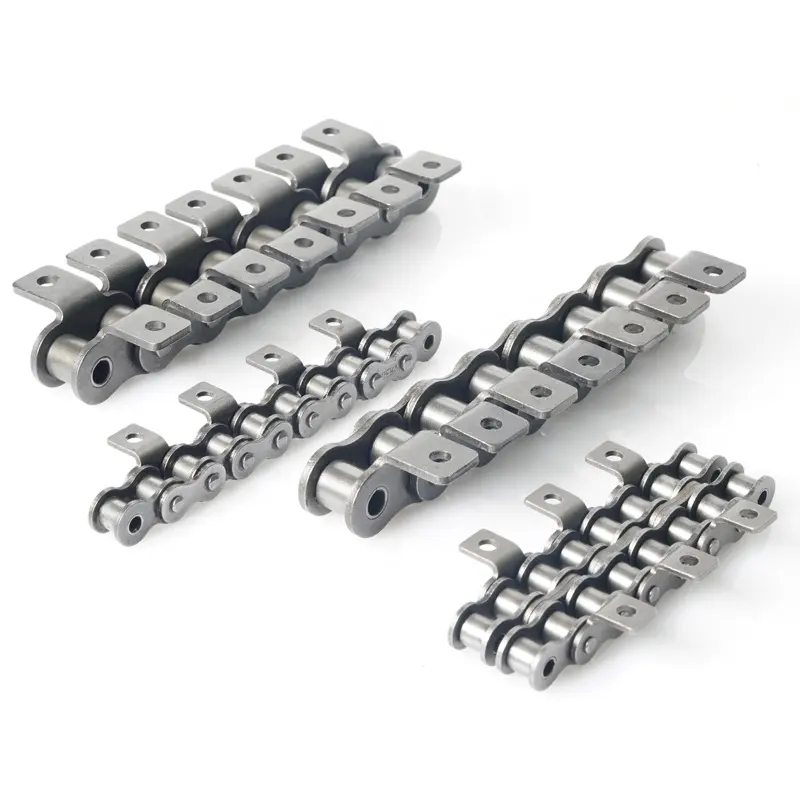
What are the benefits of using a corrosion-resistant transmission chain?
Using a corrosion-resistant transmission chain offers several advantages in terms of performance, durability, and cost-effectiveness. Here’s a detailed answer to the question:
1. Extended Lifespan: Corrosion-resistant transmission chains are specifically designed to withstand harsh environments and resist the effects of corrosion. They are made from materials such as stainless steel, nickel-plated steel, or coatings like zinc or chrome, which provide excellent protection against corrosion. By using a corrosion-resistant chain, you can significantly extend the lifespan of the chain and reduce the need for frequent replacements.
2. Reliable Performance: Corrosion can negatively impact the performance of transmission chains by causing wear, friction, and binding. Corrosion-resistant chains maintain their smooth operation and consistent performance over time, ensuring reliable power transmission and reducing the risk of chain failure or downtime.
3. Reduced Maintenance: Corrosion-resistant chains require less maintenance compared to standard chains. They are less prone to rust and degradation, resulting in lower maintenance costs and time spent on chain lubrication, cleaning, and replacement. This is particularly beneficial in industries where maintenance accessibility is challenging or costly.
4. Cost Savings: although corrosion-resistant chains may have a higher upfront cost compared to standard chains, they offer long-term cost savings. The extended lifespan and reduced maintenance requirements result in lower overall operating costs and improved equipment reliability. Additionally, avoiding premature chain failure due to corrosion can prevent costly equipment damage and production downtime.
5. Versatility: Corrosion-resistant transmission chains are suitable for a wide range of applications and environments. They can be used in industries such as food processing, marine, chemical, pharmaceutical, or outdoor equipment, where exposure to moisture, chemicals, s altwater, or other corrosive substances is common. The versatility of corrosion-resistant chains allows them to be deployed in diverse operating conditions without compromising performance or durability.
6. Compliance with Regulations: In certain industries, such as food processing or pharmaceuticals, strict regulations and hygiene standards are in place. Using corrosion-resistant chains helps meet these regulatory requirements, ensuring product integrity, safety, and compliance with industry standards.
By choosing a corrosion-resistant transmission chain, you can benefit from its extended lifespan, reliable performance, reduced maintenance, cost savings, versatility, and compliance with regulations. It is important to consider the specific application requirements and environmental conditions when selecting the appropriate corrosion-resistant chain for optimal performance and longevity.
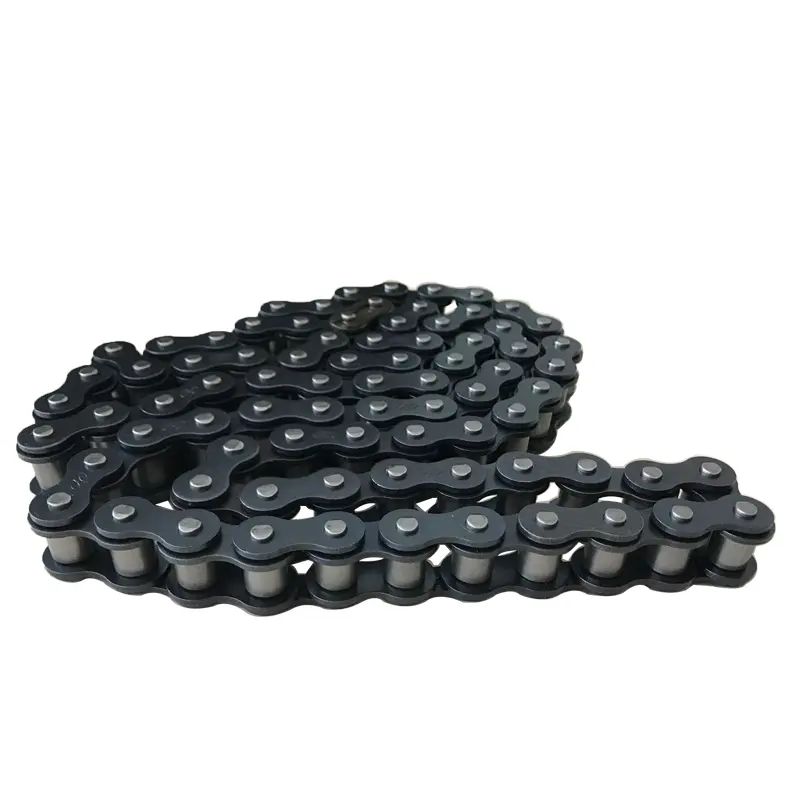
How does the speed of rotation affect the choice of transmission chain?
The speed of rotation is an important factor to consider when selecting a transmission chain for a specific application. Here’s a detailed answer to the question:
1. Fatigue and Wear: The speed of rotation directly affects the fatigue and wear characteristics of a transmission chain. Higher rotational speeds result in increased cyclic loading and wear on the chain’s components. Therefore, it is crucial to choose a chain that is designed to handle the anticipated speed and associated fatigue stresses.
2. Lubrication and Cooling: Faster rotational speeds generate more heat due to friction between the chain and the sprockets. Adequate lubrication is essential to minimize friction, reduce heat buildup, and maintain the chain’s performance and longevity. Additionally, some high-speed applications may require additional cooling mechanisms to dissipate heat effectively.
3. Centrifugal Forces: As the rotational speed increases, centrifugal forces become more significant. These forces can affect the chain’s stability, tension, and overall performance. Chains designed for high-speed applications are engineered to withstand the increased centrifugal forces and maintain proper tension during operation.
4. Dynamic Balance: High-speed rotation may introduce dynamic imbalances in the transmission system, leading to vibrations and decreased system efficiency. Special attention should be given to selecting a transmission chain with proper dynamic balance characteristics to minimize vibrations and ensure smooth operation.
5. Material and Design: Chains for high-speed applications often require specific materials and design features to accommodate the increased rotational forces and maintain reliability. High-strength alloys, precise manufacturing tolerances, and advanced surface treatments may be employed to enhance the chain’s performance and durability at high speeds.
When selecting a transmission chain, it is crucial to consider the manufacturer’s recommendations and specifications regarding maximum allowable speeds. Factors such as the application’s operational requirements, anticipated rotational speed, load, and environmental conditions should all be taken into account to ensure the chosen chain is suitable for the specific high-speed application.

What are the common industries or applications that use transmission chains?
Transmission chains are widely used in various industries and applications where the efficient transfer of power and motion is required. Here are some common industries and applications that rely on transmission chains:
- Automotive: Transmission chains are used in automobile engines and drivetrains to transfer power from the engine to the wheels.
- Agriculture: Transmission chains are utilized in agricultural machinery such as tractors, combines, and harvesters for power transmission in various applications like conveyor systems and agricultural equipment.
- Industrial Manufacturing: Transmission chains are found in a wide range of industrial machinery, including conveyors, material handling systems, packaging equipment, printing presses, and machine tools.
- Mining and Construction: Transmission chains are used in heavy machinery, such as excavators, bulldozers, and mining equipment, to transmit power for digging, lifting, and other operations.
- Food and Beverage: Transmission chains are employed in food processing equipment, bottling plants, and conveyor systems to move products along production lines.
- Textile: Transmission chains are utilized in textile manufacturing machinery, such as looms and spinning machines, for power transmission during the weaving and spinning processes.
- Energy and Utilities: Transmission chains are used in power generation plants, wind turbines, and other renewable energy systems for transmitting power from the source to the electrical grid.
- Material Handling: Transmission chains are commonly used in material handling equipment, including forklifts, palletizers, and automated storage systems, to transport and handle goods in warehouses and distribution centers.
- Marine: Transmission chains find applications in marine vessels, such as ship propulsion systems, anchor handling equipment, and winches for cargo handling.
These are just a few examples, and transmission chains are also utilized in various other industries and applications where reliable power transmission is essential. The specific design and characteristics of the transmission chains may vary based on the requirements of each industry and application.


editor by CX 2023-11-29